

Choosing between spray foam and fiberglass insulation can be challenging because both materials can help reduce heat transfer and improve the thermal performance of your home. Fiberglass is a widely used option available in batts and loose-fill forms, while spray foam expands during application and can provide both insulation and air-sealing benefits when properly installed. Differences in R-value, installation method, cost, moisture considerations, and attic design can all influence which option is appropriate for a particular home.
For homeowners in Port Charlotte and throughout Southwest Florida, the decision should also account for the region’s heat, humidity, long cooling seasons, and the location of HVAC equipment or ductwork in the attic. Rather than assuming one insulation material is always better, it is important to consider the entire attic assembly. In this guide, we’ll compare spray foam vs fiberglass insulation based on R-value, air sealing, installation, cost, durability, moisture considerations, HVAC performance, and other factors to help you understand which approach may be better suited to your home.
Spray Foam vs Fiberglass Insulation: What’s the Difference?
Spray foam and fiberglass can both help slow heat transfer, but they differ significantly in how they are installed and how they function within an attic assembly. Understanding these differences can help homeowners compare the materials based on more than R-value alone.
What Is Spray Foam Insulation?
Spray foam is a liquid-applied insulation that expands and cures after installation, allowing it to fill cavities, gaps, and irregular spaces. It is available in open-cell and closed-cell formulations, which differ in density, R-value per inch, and moisture-related properties. When properly designed and installed, spray foam can provide both thermal insulation and air-control functions. Because application requires specialized materials, equipment, safety procedures, and attention to the building assembly, professional installation is typically appropriate.
What Is Fiberglass Insulation?
Fiberglass insulation is made from fine glass fibers and is commonly used in residential attics. It is available as preformed batts and rolls as well as loose-fill material that can be blown across an attic floor. Fiberglass primarily provides thermal resistance by slowing heat transfer. Unlike properly installed spray foam, fiberglass itself is not an air-sealing material, so significant air leakage may need to be addressed separately.
Key Differences Between Spray Foam and Fiberglass
One of the biggest differences is how each material achieves thermal and air control. Spray foam generally provides more R-value per inch than standard fiberglass products, particularly with closed-cell foam, and can also help create an air barrier when installed appropriately. Fiberglass usually has a lower upfront cost and works well in many conventional attic applications, but its effectiveness depends heavily on proper fitting, depth, and consistent coverage. Moisture conditions, installation requirements, attic ventilation strategy, available space, existing insulation, and the location of HVAC equipment or ductwork should also be considered before choosing between the two.
3 Types of Spray Foam Insulation
1. Open-Cell Spray Foam
Open-cell spray foam is a lower-density material with a cellular structure that allows it to expand significantly during application. It generally provides a lower R-value per inch than closed-cell foam and is more vapor permeable, meaning water vapor can move through it more readily. When installed at the appropriate thickness and location, open-cell foam can also contribute to an attic’s air-control strategy. However, its suitability depends on factors such as the attic assembly, moisture conditions, and where the thermal and air boundaries are located.
2. Closed-Cell Spray Foam
Closed-cell spray foam is denser and more rigid than open-cell foam and typically provides a higher R-value per inch. Its closed-cell structure also makes it less vapor permeable than open-cell products. These characteristics can make closed-cell foam useful where greater thermal resistance is needed within limited space. However, its lower vapor permeability and rigidity mean the entire building assembly, including moisture management and drying potential, should be carefully considered before installation.
3. Open-Cell vs Closed-Cell Spray Foam
Neither type of spray foam is automatically the better choice for every attic. Closed-cell foam typically offers a higher R-value per inch, greater density, lower vapor permeability, and a higher upfront cost, while open-cell foam is lighter, expands more, and remains more vapor permeable. The appropriate choice depends on the application location, desired R-value, available space, moisture-management strategy, attic design, budget, and applicable building requirements. Because these materials behave differently within a building assembly, one should not be substituted for the other without evaluating how the change could affect the attic and home.
3 Types of Fiberglass Insulation
1. Fiberglass Batts and Rolls
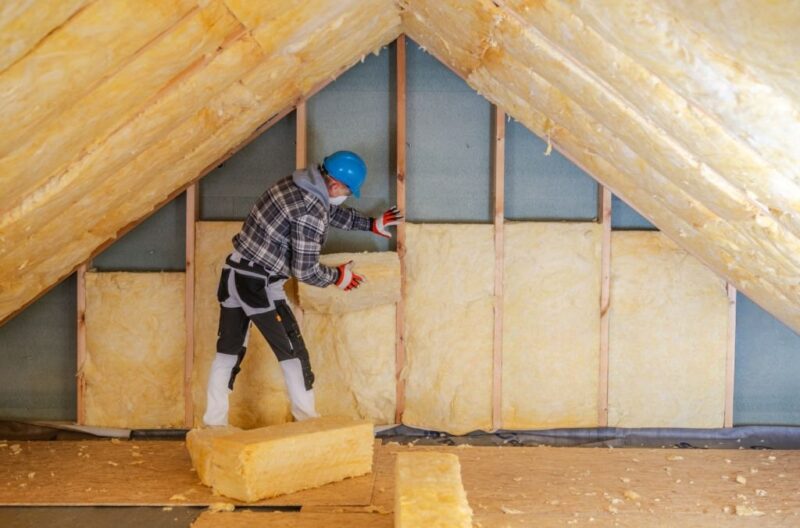
Fiberglass batts are pre-cut sections, while rolls come in longer lengths that can be trimmed to fit the installation area. Both are commonly placed between framing members and are available in different thicknesses and R-values. Proper fitting is important because gaps around framing, wiring, pipes, and other obstructions can create thermal weak points. Compressing fiberglass into a space that is too shallow can also prevent it from providing its intended thermal resistance.
2. Blown-In Fiberglass
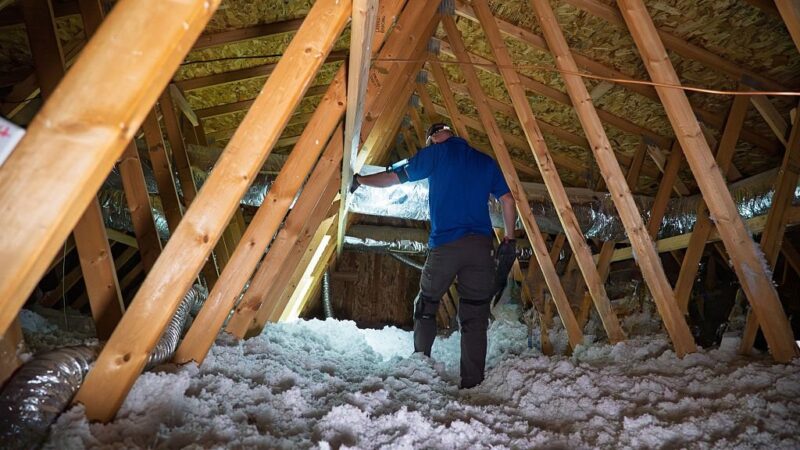
Blown-in fiberglass is a loose-fill material installed using specialized blowing equipment. Because the material can spread around framing and irregular areas, it can provide consistent coverage in attic spaces where fitting batts may be difficult. Blown-in fiberglass may also be used for some attic insulation top-offs when the existing material is clean, dry, compatible, and in suitable condition. Its R-value depends partly on installed depth and density, making proper installation and even coverage important.
3. Fiberglass Batts vs Blown-In Fiberglass
Choosing between fiberglass batts and blown-in fiberglass depends on the attic rather than one option being universally better. Batts may work well in accessible areas with regularly spaced framing and relatively few obstructions, while blown-in material can be useful for covering irregular spaces and working around framing or other obstacles. Existing insulation, attic accessibility, desired coverage, ventilation pathways, and the condition of the current material should all be considered before deciding which approach is appropriate.
Spray Foam vs Fiberglass R-Value
R-value is one of the most useful measurements for comparing spray foam and fiberglass insulation, but it should not be the only factor used to choose between them. Each material provides thermal resistance differently, and actual attic performance also depends on installation quality, air leakage, moisture conditions, coverage, and the overall attic assembly.
What R-Value Means
R-value measures a material’s resistance to heat flow. In general, a higher R-value indicates greater thermal resistance, meaning the insulation is better able to slow heat transfer under its rated conditions. However, R-value does not measure air leakage, moisture control, or the overall efficiency of the home, so it represents only one part of insulation performance.
Spray Foam R-Value
The R-value of spray foam varies by product, formulation, density, and installed thickness. Closed-cell spray foam generally provides a higher R-value per inch than open-cell foam, which can be useful when greater thermal resistance is needed within limited space. Because exact ratings vary among products, homeowners should rely on manufacturer specifications and the intended installed thickness rather than assuming every open-cell or closed-cell product has the same R-value.
Fiberglass R-Value
Fiberglass R-value depends on the specific product, density, and installed thickness. Fiberglass batts, rolls, and loose-fill products can have different ratings, so comparing them requires more than simply measuring insulation depth. Proper installation is also essential. Gaps, compression, insufficient loose-fill depth, and uneven coverage can prevent fiberglass from providing its intended thermal performance.
Why R-Value Per Inch Is Not the Only Factor
A material with a higher R-value per inch is not automatically the best choice for every attic. Air leakage, insulation coverage, fiberglass compression, moisture conditions, installation quality, and the location of the thermal boundary can all affect overall performance. For example, spray foam may contribute to air control when properly installed, while fiberglass typically requires air sealing to be addressed separately. The best comparison considers how the complete insulation system will function within the specific attic, not just which material has the larger R-value per inch.
Spray Foam vs Fiberglass for Air Sealing
One of the biggest differences between spray foam and fiberglass is how they address air movement. Both materials can provide thermal resistance, but spray foam may also serve an air-control function when properly installed. Fiberglass, on the other hand, generally requires air sealing to be handled separately.
How Spray Foam Can Help Control Air Leakage
Spray foam expands after application, allowing it to fill gaps, cracks, and irregular spaces within the area being insulated. When installed at the appropriate thickness and as part of a properly designed assembly, it can form an air barrier that helps limit uncontrolled air movement. This means spray foam can potentially combine insulation and air-control functions within a single installation, depending on the product and application.
Why Fiberglass Does Not Replace Air Sealing
Fiberglass primarily works by resisting conductive heat flow rather than sealing gaps in the building envelope. Air can still move through or around fiberglass when cracks, penetrations, and other openings have not been properly sealed. For this reason, dedicated air sealing may be appropriate before fiberglass is installed or additional insulation is added.
Common Attic Air Leakage Points
Attics can contain numerous openings between conditioned living areas and the space above. Common leakage points include gaps around plumbing and wiring penetrations, attic hatches, duct chases, recessed ceiling penetrations, and framing connections. Identifying and appropriately sealing these areas can help create a more continuous air boundary before or during an insulation upgrade.
Why Air Sealing and R-Value Are Different
R-value measures how strongly insulation resists heat flow, while air sealing addresses uncontrolled air movement through gaps and openings. A high R-value does not automatically mean an attic is airtight. For an effective attic insulation strategy, homeowners should consider both thermal resistance and air leakage rather than relying on R-value alone.
Spray Foam vs Fiberglass Installation
Spray foam and fiberglass require very different installation methods, but workmanship is critical for both. Even insulation with a strong R-value rating may not perform as intended if it is installed unevenly, compressed, applied at the wrong thickness, or leaves significant gaps. The attic should also be evaluated for moisture, air leakage, ventilation, and other existing issues before new insulation is installed.
How Spray Foam Is Installed
Spray foam begins as liquid components that are applied to designated surfaces using specialized equipment. The material expands and cures in place, filling the intended cavities or areas as it forms an insulating layer. Installers must control application thickness and coverage to achieve the intended performance while following manufacturer requirements and appropriate safety procedures. Because spray foam installation involves specialized equipment, chemical handling, ventilation considerations, and knowledge of the building assembly, it is generally a job for trained professionals.
How Fiberglass Batts Are Installed
Fiberglass batts are fitted between framing members and should be appropriately sized for the space. Careful fitting around wiring, pipes, framing, and other obstructions helps maintain consistent coverage. Batts should not be unnecessarily compressed or forced into cavities that are too small because doing so can reduce their intended thermal performance.
How Blown-In Fiberglass Is Installed
Blown-in fiberglass is mechanically distributed across attic surfaces using specialized blowing equipment. Its loose-fill form allows it to cover irregular spaces and work around framing and other obstacles more easily than pre-cut batts in some attics. Achieving the intended R-value depends on installing the material at the appropriate depth and density while maintaining consistent coverage throughout the target area.
Why Installation Quality Matters
The rated performance of insulation assumes that it is installed according to applicable product requirements. Gaps, voids, missed areas, uneven thickness, compressed fiberglass, or improperly applied spray foam can create thermal weak points and reduce overall effectiveness. Surfaces and attic conditions should also be properly evaluated and prepared because unresolved moisture, contamination, or other underlying problems should not simply be covered with new insulation.
Spray Foam vs Fiberglass Cost
Cost is often one of the biggest considerations when comparing spray foam and fiberglass insulation. Fiberglass generally has a lower upfront price, while spray foam typically requires a larger initial investment. However, the final cost of either option depends on the attic, desired insulation level, preparation work, and installation requirements, so comparing materials by price alone may not provide the full picture.
Fiberglass Upfront Costs
Fiberglass generally has a lower initial material cost than spray foam and can be relatively straightforward to install in many conventional attic assemblies. Batts, rolls, and blown-in fiberglass also provide different options depending on the existing attic and desired coverage. Final pricing can vary based on the product, required thickness or R-value, attic square footage, labor, and whether additional preparation is necessary.
Spray Foam Upfront Costs
Spray foam typically requires a higher initial investment because of the specialized materials, application equipment, safety procedures, and professional installation involved. Pricing can also differ between open-cell and closed-cell formulations, with closed-cell products generally costing more due in part to their greater density and material requirements. The application area and required thickness can further influence project cost.
Factors That Affect Insulation Cost
The size of the attic is only one factor that determines the final price. Material choice, target R-value, existing insulation, removal or disposal requirements, attic accessibility, and necessary air sealing can all affect the scope of work. Moisture damage, pest contamination, or other conditions may also require additional evaluation or remediation before new insulation can be installed.
Why the Cheapest Option Is Not Always the Best Value
Choosing insulation based solely on the lowest upfront price can overlook important differences in how the materials function within the attic. Air-sealing needs, existing insulation condition, installation complexity, the intended location of the thermal boundary, HVAC and ductwork configuration, and long-term project goals should all be considered. The better value is the insulation strategy that appropriately fits the home and is installed correctly, rather than simply the material with the lowest initial cost.
Spray Foam vs Fiberglass Durability
Both spray foam and fiberglass insulation can remain effective for many years when properly installed and protected from damage, but they behave differently over time. Rather than relying on age alone to decide whether insulation needs attention, homeowners should consider its current condition, coverage, and any changes that may have occurred within the attic.
Fiberglass Settling, Compression, and Disturbance
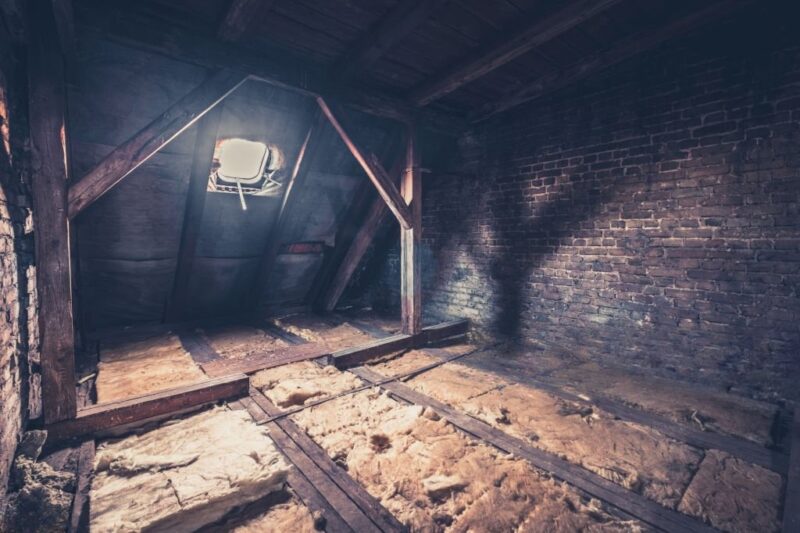
Loose-fill fiberglass may settle over time, potentially reducing its depth or creating uneven areas. Fiberglass batts can also become compressed, shifted, or displaced by storage, foot traffic, pests, or work performed in the attic. Roofing, electrical, plumbing, and HVAC projects can disturb insulation and leave gaps or bare areas that may reduce overall thermal performance.
Spray Foam and Long-Term Stability
Spray foam adheres directly to the surface where it is applied and does not settle in the same way as loose-fill insulation. Once properly cured, it generally remains in place unless the material or surrounding building assembly is damaged or altered. However, long-term performance still depends on correct initial installation, appropriate application thickness, compatibility with the attic assembly, and protection from water intrusion or physical damage.
Why Insulation Condition Matters More Than Age Alone
Older insulation does not automatically need to be replaced, just as newer insulation is not guaranteed to be performing properly. Moisture exposure, pest contamination, physical damage, compression, disturbance, and inconsistent coverage can all affect insulation regardless of age. Evaluating the material’s actual condition and how well it continues to cover the intended thermal boundary provides a better basis for deciding whether it should remain, be supplemented, or be replaced.
Spray Foam vs Fiberglass and HVAC Performance
Attic insulation can influence HVAC performance by affecting how much heat moves between the attic and conditioned areas of the home. Both spray foam and fiberglass can help limit heat transfer when properly selected and installed, but they may interact with the attic and HVAC system differently. This is especially relevant in Florida, where air conditioning systems often operate through long cooling seasons.
How Attic Insulation Can Affect Cooling Demand
Attic insulation helps slow heat transfer through the building envelope, limiting the amount of unwanted heat reaching conditioned living spaces. By reducing unnecessary heat gain, adequate insulation may help decrease the cooling demand placed on the HVAC system and support more consistent indoor comfort. Actual results still depend on factors such as outdoor temperatures, home construction, air leakage, thermostat settings, duct condition, and HVAC efficiency.
How Spray Foam Can Change the Attic Environment
When spray foam is applied at the underside of the roof deck as part of an appropriately designed assembly, it can move the thermal and air boundary from the attic floor toward the roofline. This may change the conditions experienced by HVAC equipment and ductwork located in the attic. Because the attic functions differently after such a change, existing ventilation, moisture management, combustion safety where applicable, and HVAC design should be evaluated before proceeding.
How Fiberglass Can Support HVAC Performance
Fiberglass is commonly installed at ceiling level in conventional vented attics, where it helps resist heat transfer between the attic and the conditioned rooms below. Consistent depth and coverage can help reduce thermal weak points across the ceiling assembly. However, fiberglass does not repair leaking or poorly insulated ducts, so ductwork concerns should be evaluated and addressed separately.
What Insulation Cannot Fix
Neither spray foam nor fiberglass can correct mechanical HVAC problems. Refrigerant issues, restricted airflow, dirty or damaged equipment, incorrect system sizing, and duct leakage require appropriate HVAC evaluation and service. If an air conditioner runs for long periods or struggles to maintain comfortable temperatures, insulation may be one contributing factor, but the HVAC system and ductwork should also be considered before determining the cause.
Spray Foam vs Fiberglass for Attic Ductwork
The location of HVAC ductwork can be an important consideration when comparing spray foam and fiberglass insulation. In many Florida homes, ducts run through the attic, where they may be exposed to conditions that are much warmer than the conditioned air traveling through them. The insulation strategy can affect the environment around those ducts, but building insulation does not replace proper duct sealing, duct insulation, or HVAC maintenance.
Why Attic Duct Location Matters
Ductwork located in a hot, unconditioned attic can gain heat as cooled air travels toward the rooms below, particularly if the ducts are poorly insulated. Leakage can create an additional problem by allowing conditioned air to escape or attic air to enter the duct system. Because heat gain and duct leakage are separate issues, both the attic insulation and the duct system should be evaluated when addressing cooling or comfort concerns.
Spray Foam and the Attic Thermal Boundary
When spray foam is applied at the roof deck as part of a properly designed attic assembly, it may move the thermal and air boundary toward the roofline. Depending on the design, this can place attic ductwork within the insulated enclosure and change the conditions surrounding it. However, converting the attic in this way can also affect ventilation, moisture management, and HVAC operation, so the existing attic and HVAC configuration should be evaluated before choosing this approach.
Fiberglass and Attic Ductwork
Fiberglass installed at the ceiling level primarily helps reduce heat transfer between the attic and the conditioned living areas below. It does not insulate, seal, or repair the HVAC ducts running above it. Damaged duct insulation, disconnected sections, air leakage, or other ductwork concerns should therefore be inspected and addressed separately rather than relying on additional attic-floor insulation to correct them.
Pros and Cons of Spray Foam Insulation
Spray foam offers several characteristics that can make it useful for certain attic applications, particularly when air sealing and thermal resistance need to be addressed together. However, it also comes with higher upfront costs and more complex installation considerations. Whether it is appropriate depends on the attic design, moisture conditions, HVAC configuration, project goals, and budget.
Advantages of Spray Foam
One of spray foam’s primary advantages is its ability to expand into gaps and irregular spaces, allowing it to provide insulation while also contributing to an air-control strategy when properly installed. Some products, particularly closed-cell spray foam, offer a relatively high R-value per inch, which can be useful where installation space is limited. Because cured spray foam adheres to the application surface, it also does not settle in the same way that loose-fill insulation can over time.
Potential Drawbacks of Spray Foam
Spray foam typically has a higher upfront cost than fiberglass and requires specialized equipment, safety procedures, and trained installation. Once applied and cured, it can also make future access, removal, repairs, or modifications to parts of the building assembly more complicated. Moisture management requires careful consideration as well, particularly because open-cell and closed-cell products have different vapor-permeability characteristics. The attic design, ventilation strategy, roof condition, HVAC configuration, and intended thermal boundary should therefore be evaluated before spray foam is installed.
Pros and Cons of Fiberglass Insulation
Fiberglass remains a common choice for attic insulation because it is widely available, versatile, and generally more affordable upfront than spray foam. It can provide effective thermal resistance when properly installed, but its performance depends heavily on consistent coverage, correct thickness, and attention to air sealing.
Advantages of Fiberglass
Fiberglass generally has a lower upfront cost than spray foam, making it a practical option for many attic insulation projects. It is widely available in batts, rolls, and loose-fill forms, allowing installers to select a format that suits the attic configuration and existing insulation. Fiberglass can work well in many conventional vented attics, whether used as part of a new installation or, when conditions are appropriate, to supplement existing insulation.
Potential Drawbacks of Fiberglass
Fiberglass primarily provides thermal resistance and does not replace dedicated air sealing, so gaps and penetrations in the building envelope may need to be addressed separately. Batts can lose effectiveness when they are poorly fitted, compressed, or displaced, while loose-fill fiberglass may settle or become uneven over time. Gaps around framing, wiring, plumbing, attic access points, and other obstructions can also create thermal weak points, making proper installation and consistent coverage essential.
Spray Foam vs Fiberglass for Sound Control
Sound control may be another consideration when comparing spray foam and fiberglass insulation. Both materials can contribute to reducing sound transmission in certain assemblies, but insulation alone does not determine how quiet a room or home will be. The effectiveness depends on the insulation material, installation location, and overall construction of the ceiling, wall, or roof assembly.
Fiberglass and Sound Absorption
The fibrous structure of fiberglass can help absorb sound energy within wall and ceiling cavities, potentially reducing some sound transmission between spaces. However, results depend on factors such as insulation thickness, installation quality, framing, drywall, and the type and frequency of the sound. Fiberglass should therefore be viewed as one component of a broader sound-control assembly rather than a complete soundproofing solution.
Open-Cell Spray Foam and Sound
Open-cell spray foam has a softer, less dense cellular structure than closed-cell foam and may provide sound-dampening benefits in some applications. Because it expands to fill the area where it is applied, it can also help reduce gaps that may allow sound and air to travel. The level of sound reduction varies according to application thickness, location, surrounding materials, and overall assembly design.
Insulation Is Not the Same as Complete Soundproofing
Neither fiberglass nor spray foam should be expected to make a home completely soundproof on its own. Sound can travel through framing, drywall, doors, windows, penetrations, openings, and other parts of the building structure. Effective sound control typically requires considering the complete assembly, including insulation, framing configuration, surface materials, air gaps, and potential pathways for sound transmission.
Spray Foam vs Fiberglass Safety Considerations
Both spray foam and fiberglass insulation have safety considerations, particularly during installation. The materials involve different types of exposure, so it is more accurate to evaluate their specific handling, installation, and manufacturer requirements rather than assuming one insulation type is universally safer than the other.
Fiberglass Installation Safety
Fiberglass fibers can irritate the skin, eyes, and respiratory system during cutting, handling, or installation. Installers should use appropriate protective equipment and follow product instructions and applicable safety practices. Careful handling can also help limit unnecessary disturbance and keep fiberglass fibers contained during attic work.
Spray Foam Installation Safety
Spray foam involves chemical components that require specialized handling, application equipment, and safety procedures. Proper ventilation and appropriate personal protective equipment are important during installation, and manufacturer guidance regarding application, curing, re-entry, and re-occupancy should be followed. These requirements are among the reasons spray foam installation is generally best handled by trained professionals.
Avoid Calling One Material Universally Safer
Safety comparisons should distinguish between exposure during installation and the performance of insulation after it has been properly installed. Fiberglass and spray foam have different handling considerations, and requirements can vary by product. Following manufacturer instructions, applicable building and safety requirements, and professional installation practices provides a more useful approach than labeling either material as universally safer.
Spray Foam vs Fiberglass Maintenance and Repairs
Spray foam and fiberglass generally do not require routine maintenance in the same way HVAC equipment does, but their condition should still be checked when attic work, water intrusion, pest activity, or building modifications occur. Regular awareness of insulation condition can help identify problems before additional insulation or repairs are planned.
Inspecting Fiberglass
Fiberglass should be inspected for settling, compression, displacement, moisture, and pest contamination. Loose-fill material can settle or become uneven, while batts may be compressed or shifted during attic work. Wet, contaminated, or significantly damaged fiberglass should be evaluated before new insulation is added because simply covering the affected material does not correct the underlying problem.
Inspecting Spray Foam
Spray foam generally stays attached to the surface where it was applied, but it may need evaluation after roof repairs, water intrusion, electrical work, HVAC modifications, or other projects that affect the insulated assembly. Physical damage, exposed areas, or changes to the roof deck or other application surfaces can affect continuity. Any source of water intrusion should also be identified and corrected rather than assuming the foam itself will resolve the moisture problem.
Consider Future Attic Access
Future access is an important consideration when choosing and maintaining attic insulation. Electricians, plumbers, HVAC technicians, roofers, and other professionals may need to reach wiring, plumbing, ductwork, HVAC equipment, or portions of the roof deck. Because spray foam adheres to surfaces while fiberglass can generally be moved and repositioned more easily, the insulation strategy should account for components that may require future inspection, servicing, repair, or replacement.
How to Choose Between Spray Foam and Fiberglass
Choosing between spray foam and fiberglass should involve more than comparing R-value or upfront price. The appropriate material depends on how the attic is designed, what insulation is already present, whether air or moisture problems exist, and how HVAC equipment and ductwork interact with the space. Evaluating the attic as a complete system can help homeowners make a more informed choice.
Determine Your Attic Type
Start by identifying whether the home has a conventional vented attic, an unvented attic, or another type of roof and attic assembly. Fiberglass is commonly installed at ceiling level in vented attics, while spray foam may be used at the roof deck in certain assemblies. Changing the location of the thermal and air boundary can affect how the attic functions, so attic type should be understood before selecting insulation.
Identify the Existing Insulation
Determine whether the attic currently contains fiberglass batts, blown-in fiberglass, cellulose, spray foam, or another material. Existing insulation may influence whether new material can be added, whether different insulation types can work together, and whether removal is appropriate before the upgrade begins.
Evaluate Existing Insulation Condition
Existing insulation does not automatically need replacement simply because it is older. Check for settling, compression, gaps, moisture, pest contamination, physical damage, and uneven coverage. Clean, dry, properly installed insulation may still contribute useful thermal resistance, while damaged or contaminated areas may require removal or replacement.
Determine the Appropriate R-Value
The desired R-value should reflect the home’s climate, attic assembly, existing insulation, and applicable requirements. Spray foam and fiberglass provide different R-values per inch, so the amount of material needed can vary significantly. Manufacturer specifications should be used when determining the thickness required for a particular product.
Check for Air Leakage
Look for uncontrolled air movement around attic hatches, wiring and plumbing penetrations, duct chases, framing gaps, and other openings. Spray foam can contribute to air control when appropriately installed, while fiberglass generally requires air sealing to be addressed separately. Air leakage should therefore be considered alongside insulation R-value.
Evaluate Moisture Conditions
Roof leaks, plumbing leaks, condensation, and wet insulation should be investigated before new insulation is installed. Spray foam and fiberglass behave differently when exposed to moisture, but neither should be used to hide an unresolved water problem. Correct the moisture source first and evaluate affected materials before proceeding.
Consider Available Installation Space
Available space can influence material selection because different insulation products provide different levels of thermal resistance per inch. Closed-cell spray foam, for example, generally provides a higher R-value per inch than fiberglass, which may be useful in certain space-constrained assemblies. However, available space should be considered alongside cost, moisture behavior, and the overall design.
Consider HVAC and Duct Locations
If HVAC equipment or ductwork is located in the attic, consider how the proposed insulation strategy could affect the environment around it. Applying spray foam at the roof deck may change the thermal boundary in some designs, while fiberglass installed at ceiling level typically leaves ducts within the vented attic. Duct leakage, damaged duct insulation, and equipment problems should still be addressed separately.
Verify Applicable Building Requirements
Insulation, ventilation, fire protection, and other building requirements can vary according to the project and attic assembly. Before choosing spray foam or fiberglass, verify the requirements that apply to the specific home rather than relying solely on generic insulation recommendations.
Compare the Complete Project Cost
Compare more than the price of the insulation material itself. The complete project may include existing insulation removal, air sealing, moisture repairs, preparation, labor, ventilation modifications, and other necessary work. Spray foam typically has a higher upfront cost, while fiberglass may be more budget-friendly, but the appropriate value depends on the complete scope of the project.
Choose Based on the Whole Attic System, Not One Feature
Neither the highest R-value nor the lowest price should determine the decision by itself. Insulation type, air sealing, moisture management, ventilation, HVAC configuration, ductwork, existing materials, installation quality, and budget all need to work together. A professional attic evaluation can help determine whether spray foam, fiberglass, or another insulation strategy is better suited to the specific home.
Why Port Charlotte Homeowners Trust Dale’s AC
Choosing attic insulation is easier when you have a local team that understands how insulation, ductwork, air leakage, and HVAC performance work together. At Dale’s AC, we help Port Charlotte and Southwest Florida homeowners evaluate their attic conditions and make practical insulation decisions based on the needs of the home rather than recommending a one-size-fits-all solution.
Serving Southwest Florida Since 1974
We have served Southwest Florida since 1974, giving our team decades of experience with the cooling and comfort challenges local homeowners face. Our familiarity with Florida’s heat, humidity, and long cooling seasons helps us evaluate attic insulation within the context of the region’s climate and the way local homes are built.
Professional Attic Insulation Evaluations
Before recommending an insulation upgrade, we can evaluate the attic’s existing insulation, depth, coverage, and overall condition. We look for concerns such as thin or bare areas, compression, settling, moisture, contamination, and other conditions that may affect thermal performance.
Fiberglass Attic Insulation Solutions
We offer fiberglass attic insulation solutions based on the home’s existing conditions and insulation needs. Whether an attic may benefit from additional insulation or more extensive insulation removal and replacement, we can help determine an appropriate approach while considering R-value, coverage, air sealing, ventilation, and attic accessibility.
HVAC and Building-Envelope Experience
Attic insulation is only one part of home comfort. Our HVAC experience allows us to consider how the building envelope interacts with the air conditioning system, helping homeowners avoid treating every comfort or cooling concern as an insulation-only problem.
Evaluating Insulation, Ductwork, and Cooling Together
Because many Florida homes have ductwork or HVAC components in the attic, we consider how these systems interact with the insulation strategy. Duct leakage, damaged duct insulation, airflow concerns, and HVAC condition can influence comfort and cooling performance independently of attic insulation, so evaluating them together can provide a more complete picture.
Recommendations Based on Your Home
Every attic has different construction, insulation, ventilation, moisture conditions, and HVAC configurations. We base our recommendations on what we find in the home rather than assuming that one insulation material or the highest possible R-value is always the best choice.
FAQs About Spray Foam and Fiberglass Insulation
Which Has a Higher R-Value, Spray Foam or Fiberglass?
Spray foam generally provides a higher R-value per inch than standard fiberglass products, particularly when comparing closed-cell spray foam with fiberglass. However, exact R-values vary by product, density, thickness, and installation. A higher R-value per inch also does not automatically make one material the better choice because air leakage, moisture conditions, attic design, and installation quality matter as well.
Is Spray Foam Better for Air Sealing?
Spray foam can provide both thermal resistance and air-control benefits when the appropriate product is properly installed at the required thickness. Because it expands during application, it can fill gaps and irregular spaces within the target area. Whether it is appropriate for an attic still depends on the overall building assembly, moisture strategy, and intended location of the thermal and air boundaries.
Does Fiberglass Need Separate Air Sealing?
Fiberglass primarily slows heat transfer and does not function as a dedicated air-sealing material. Gaps around plumbing, wiring, attic access points, duct chases, and other penetrations may therefore need to be sealed separately. Addressing significant air leakage before adding fiberglass can help the overall attic insulation system perform as intended.
Can You Put Spray Foam Over Fiberglass?
Using spray foam in an attic that already contains fiberglass may be possible in some situations, but the materials should not simply be layered together without evaluating the attic first. The location of each material, existing moisture conditions, ventilation strategy, and intended thermal and air boundaries all matter. A professional evaluation can help determine whether the existing fiberglass should remain or whether changes are necessary before spray foam is installed.
Should Fiberglass Be Removed Before Installing Spray Foam?
Not always. Whether fiberglass needs to be removed depends on its condition, location, and the proposed spray foam application. Wet, contaminated, pest-damaged, or otherwise compromised insulation may require removal, while clean and dry material may be handled differently depending on the attic design. If spray foam will change the attic’s thermal boundary, the complete assembly should be evaluated before deciding what to do with existing insulation.
Can You Add More Fiberglass Over Existing Fiberglass?
Additional fiberglass can sometimes be installed over existing fiberglass when the current material is clean, dry, compatible, and in suitable condition. Before adding more, the attic should be checked for moisture, contamination, compression, gaps, and other problems. Air leakage may also need to be addressed before the insulation level is increased.
Does Spray Foam Trap Moisture?
It is too broad to say that spray foam always traps moisture. Open-cell and closed-cell spray foams have different vapor-permeability characteristics, and their effect on moisture depends on where and how they are installed. Roof leaks, condensation risks, drying potential, ventilation, and the overall building assembly should be evaluated before installation rather than relying on spray foam itself to solve moisture problems.
What Happens if Fiberglass Gets Wet?
Wet fiberglass may provide reduced thermal performance while moisture is present, and persistent dampness can indicate a roof leak, plumbing problem, condensation issue, or another source of water intrusion. The moisture source should be identified and corrected first. Affected insulation should then be evaluated to determine whether it can remain or needs to be removed and replaced.
Can Spray Foam or Fiberglass Help Reduce AC Runtime?
Adequate attic insulation can help limit unwanted heat transfer into conditioned areas, which may reduce unnecessary cooling demand and potentially affect how long the air conditioner needs to operate under certain conditions. However, long AC runtime can also result from outdoor temperatures, thermostat settings, duct leakage, restricted airflow, equipment condition, system sizing, and other factors. Insulation should not be assumed to be the sole cause or solution.
Will Spray Foam or Fiberglass Lower Cooling Bills?
Properly installed insulation may help reduce unwanted heat gain and support more efficient use of the cooling system, but neither spray foam nor fiberglass guarantees lower energy bills or a specific amount of savings. Utility costs are influenced by many factors, including weather, energy rates, thermostat settings, home construction, air leakage, duct condition, HVAC efficiency, and household usage. The goal should be an insulation strategy appropriate for the home rather than a guaranteed savings figure.
Foam, Fiberglass, or Figuring it Out? Call Dale’s AC!
Choosing between spray foam and fiberglass insulation comes down to more than R-value or upfront cost. Attic design, existing insulation, air leakage, moisture conditions, ductwork, HVAC equipment, available space, and budget should all be considered before making a decision. If you are exploring attic insulation in Port Charlotte, it can also be helpful to evaluate the rest of your home comfort system. At Dale’s AC, we provide AC maintenance in Port Charlotte, AC installation in Port Charlotte, AC replacement in Port Charlotte, air conditioning repair in Port Charlotte, Indoor air quality in Port Charlotte, and comprehensive residential HVAC services in Port Charlotte. We also provide Commercial HVAC services in Port Charlotte for local businesses with heating and cooling needs.
At Dale’s AC as a trusted HVAC company in Port Charlotte we’re here to help you understand what your attic and HVAC system actually need, without treating insulation as a one-size-fits-all solution. Our team can evaluate your insulation, ductwork, and cooling system together and recommend practical improvements based on your home. We also offer financing options for qualifying projects to help make eligible home comfort upgrades more manageable. Call us today at (941) 629-1712 or contact us to schedule an evaluation and find the right approach for your home.