


If you have ever looked at attic insulation products, you have probably seen ratings such as R-30, R-38, or R-49. These numbers refer to R-value, a measure of how well insulation resists heat flow. In general, a higher R-value provides greater thermal resistance, but choosing the right attic insulation involves more than simply selecting the highest number available. Material type, installed thickness, coverage, compression, and overall installation quality can all affect performance.
For homeowners in Port Charlotte and throughout Southwest Florida, understanding R-value can be especially helpful when evaluating attic insulation and home cooling needs. Proper insulation can help slow heat transfer between a hot attic and the conditioned living areas below, but R-value is only one part of the picture. In this guide, we’ll explain what R-value means, how different insulation materials compare, how R-value relates to your HVAC system, and why air sealing, ventilation, moisture conditions, and installation quality should also be considered.
What Is R-Value in Insulation?
R-value is one of the most common measurements used to compare insulation performance. It helps homeowners understand how strongly a material resists heat moving through it, but it should be considered alongside factors such as insulation type, thickness, coverage, compression, air leakage, and installation quality.
R-Value Measures Resistance to Heat Flow
R-value measures thermal resistance, or how well a material resists the transfer of heat. Insulation works by slowing heat movement through the building envelope, and a higher R-value generally indicates greater resistance to that heat flow. In an attic, this helps describe how effectively the insulation can limit heat transfer between the attic space and the conditioned rooms below.
What Does the “R” in R-Value Mean?
The “R” stands for resistance. More specifically, it refers to resistance to heat flow through a material or assembly. The higher the R-value, the more resistance the insulation provides under the conditions used to rate it.
What Do Numbers Like R-30 and R-49 Mean?
Numbers such as R-30 and R-49 indicate different levels of thermal resistance, with the higher number representing greater resistance to heat flow. These values help compare insulation levels, but they do not tell the whole story. Gaps, compression, uneven coverage, air leakage, moisture, and poor installation can all affect how well the attic performs even when the insulation has a high rated R-value.
How Is R-Value Measured?
R-value is influenced by factors such as the insulation material, its thickness, and its thermal conductivity. Manufacturers determine ratings through standardized testing and provide R-values for specific products and installed thicknesses. Actual attic performance can still vary if the insulation is compressed, uneven, wet, poorly fitted, or installed differently from the conditions used for the rating.
How Does R-Value Work in an Attic?
R-value helps describe how much resistance attic insulation provides against heat flow. In a Florida home, this matters because the attic can become much hotter than the conditioned rooms below, especially during long cooling seasons. The goal of attic insulation is to slow that heat transfer so the home’s thermal boundary performs more effectively.
Heat Naturally Moves From Warmer to Cooler Areas
Heat naturally moves from warmer areas toward cooler areas, including through roof assemblies and ceilings. During hot weather, attic heat can move toward conditioned living spaces below. Because the attic often sits directly above much of the home, it becomes an important part of the thermal boundary that helps separate outdoor and attic heat from indoor comfort.
Attic Insulation Slows Heat Transfer
Attic insulation creates resistance between the hot attic and the conditioned living space below. This added thermal resistance helps slow heat transfer through the ceiling assembly. In Florida, where cooling demand can remain high for much of the year, consistent attic insulation can play an important role in limiting unnecessary heat gain.
Why Higher R-Value Usually Means Greater Thermal Resistance
A higher R-value generally means greater resistance to conductive heat flow. However, a higher rating does not automatically mean every attic installation will perform better. Gaps, compression, uneven coverage, moisture, and poor installation can all reduce overall effectiveness, so R-value should be considered alongside installation quality and attic conditions.
R-Values Can Be Additive
When insulation layers are installed as part of a multilayer assembly, their R-values can generally contribute to the total thermal resistance. This means existing insulation and new insulation may sometimes work together when the older material is still clean, dry, compatible, and properly positioned. However, loose-fill insulation does not necessarily gain performance in a perfectly proportional way simply by adding more material, so condition, installed depth, density, and overall compatibility should still be evaluated.
Why R-Value Matters for Attic Insulation
R-value gives homeowners a practical way to understand and compare how much thermal resistance different insulation materials and assemblies provide. In an attic, that information can help guide material selection, installed depth, and upgrade decisions, but it should always be considered alongside coverage, air sealing, ventilation, moisture conditions, and installation quality.
Helps Limit Heat Transfer Through the Ceiling
Attic insulation with an appropriate R-value helps slow heat moving through the ceiling assembly between the attic and the conditioned living space below. This is especially important in hot climates, where attic temperatures can increase heat gain into the home.
Supports Indoor Comfort
By reducing heat transfer through the attic, insulation can help support more stable indoor temperatures. Rooms directly below the attic may benefit from more consistent thermal protection when insulation is evenly installed and free from significant gaps, compression, or bare areas.
May Help Reduce Cooling Demand
Adequate attic insulation may help reduce the amount of heat the HVAC system has to manage during hot weather. This can support lower unnecessary cooling demand, although actual results depend on factors such as the home’s construction, ductwork, air leakage, HVAC condition, thermostat settings, and weather.
Helps Homeowners Compare Insulation Options
R-value provides a common measurement that makes it easier to compare different insulation materials and thicknesses. Because materials provide different levels of resistance per inch, R-value can help homeowners understand why one product may require more or less thickness than another to reach a similar level of thermal resistance.
Helps Determine How Much Insulation May Be Needed
Knowing the approximate R-value of existing attic insulation can help guide whether additional material may be needed. The decision should also account for the insulation type, current depth, settling, compression, damage, and coverage rather than relying on a single number alone.
Connects Insulation Choices With Local Climate and Building Requirements
Recommended insulation levels can vary by climate and project type, so R-value helps connect insulation decisions with local conditions and applicable building requirements. For Florida homeowners, the goal is not simply to choose the highest R-value possible, but to select an appropriate insulation strategy for the specific attic, home design, and cooling needs.
How Insulation Type Affects R-Value
Different insulation materials provide different levels of thermal resistance per inch, which means two attics can reach similar overall R-values using different materials and installed thicknesses. Material choice should therefore consider not only the advertised R-value, but also installation method, available space, moisture conditions, attic design, and how well the insulation can be installed consistently.
Fiberglass Batts
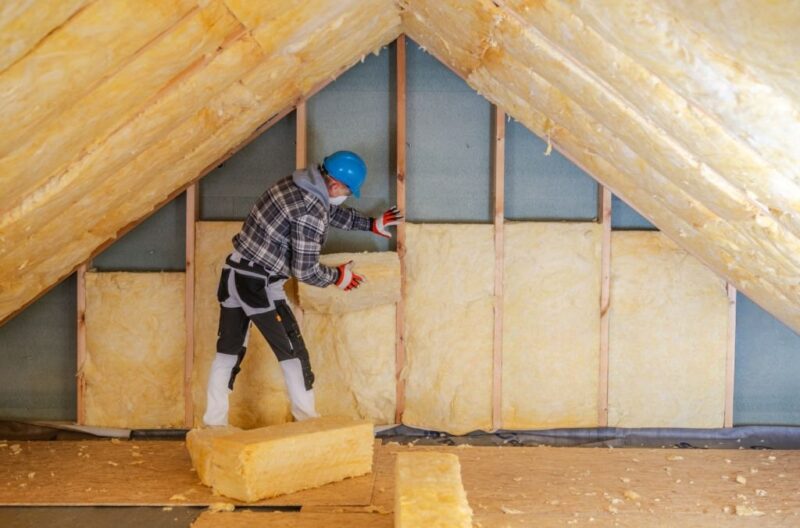
Fiberglass batts are a common attic insulation option and are available in different thicknesses and R-values. Their performance depends on selecting the appropriate product and fitting it correctly between framing members. Gaps, poor fitting, and unnecessary compression can reduce the effectiveness of the installed insulation, so maintaining the intended thickness is important.
Blown-In Fiberglass
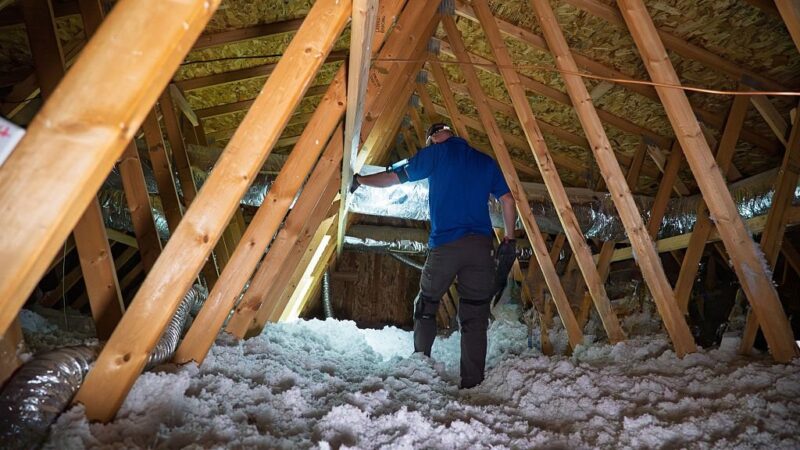
Blown-in fiberglass is a loose-fill material that can be useful for covering irregular attic spaces and areas around framing or other obstructions. Its installed R-value depends on factors such as depth and density, making even distribution important. Settling, shallow areas, or inconsistent coverage can create thermal weak points that reduce overall attic performance.
Cellulose
Cellulose is another loose-fill insulation material and provides a different R-value per inch than fiberglass products. Proper installed depth and density are important for achieving the intended thermal resistance. Existing moisture conditions should also be evaluated before installation because leaks, damp materials, or unresolved condensation concerns should not simply be covered with new insulation.
Open-Cell Spray Foam
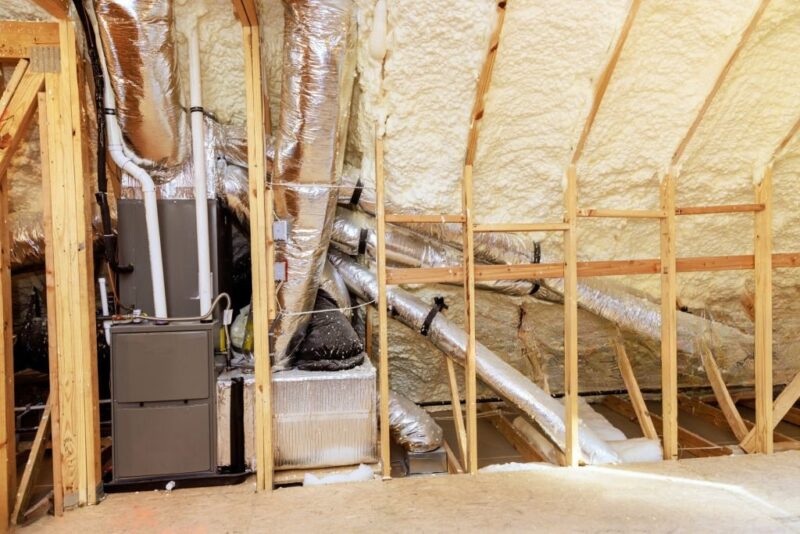
Open-cell spray foam provides thermal resistance while also potentially contributing to the air-control strategy when installed appropriately. Its R-value per inch differs from closed-cell foam, and the location of the application, such as the roof deck or another part of the attic assembly, can affect how the attic functions. These factors should be evaluated as part of the overall insulation and moisture-management strategy.
Closed-Cell Spray Foam
Closed-cell spray foam is denser than open-cell foam and typically provides a greater R-value per inch. This can make it useful where available space is limited, but it also requires specialized installation and careful consideration of the attic assembly. Moisture management, application location, existing insulation, ventilation, and HVAC configuration should be evaluated before choosing this approach.
How Insulation Thickness Affects R-Value
Insulation thickness plays an important role in determining total R-value, but the relationship depends on the material being used and how it is installed. In general, adding more insulation can increase thermal resistance, although thickness alone is not enough to determine how well an attic will perform.
More Thickness Generally Increases R-Value
For many insulation materials, increasing the installed thickness generally increases the total R-value. More material creates additional resistance to heat flow, which can help improve the thermal performance of the attic. However, the added insulation still needs to be installed at the correct density and without excessive compression or gaps.
Different Materials Require Different Thicknesses
Insulation materials provide different amounts of R-value per inch, so they do not all require the same thickness to reach a similar target R-value. Fiberglass, cellulose, and spray foam each have different thermal characteristics, which is why material type should be identified before estimating how much insulation is needed.
Loose-Fill Insulation Can Settle
Blown-in fiberglass and cellulose can settle over time, which may reduce the installed depth in some areas of the attic. Uneven settling can also leave thinner spots that provide less thermal resistance than surrounding areas. Checking insulation depth in several locations can help identify whether coverage remains consistent.
Compression Can Affect Fiberglass Performance
Fiberglass insulation is designed to perform at a specific thickness. Compressing batts or rolls into a space that is too shallow can reduce their effectiveness because the material is no longer installed as intended. Rather than forcing thicker insulation into a smaller cavity, the appropriate product and installation method should be selected for the available space.
Depth Alone Does Not Tell the Whole Story
Measuring insulation depth can be useful, but it does not provide a complete picture of attic R-value on its own. The material type must be known because different products provide different resistance per inch. The insulation’s condition also matters, including whether it is compressed, wet, damaged, or disturbed. Finally, installation quality, such as even coverage and the absence of significant gaps, plays an important role in how effectively the insulation performs.
R-Value and Moisture: What Homeowners Should Know
R-value measures resistance to heat flow, but it does not tell homeowners whether insulation is protected from moisture. Water intrusion, condensation, and damp insulation can create separate problems that should be addressed before adding more material or trying to increase an attic’s R-value.
R-Value Is Not a Moisture Rating
A high R-value does not mean an insulation product is waterproof or that the attic is protected from moisture problems. Thermal resistance and moisture management are different considerations, so homeowners should evaluate both when planning an insulation upgrade.
Check for Roof and Plumbing Leaks
Before adding insulation, check for signs of roof leaks, plumbing leaks, or other sources of water intrusion. Stains, damp materials, deteriorated wood, or wet insulation may indicate an issue that needs further evaluation. Covering these areas with new insulation can make the underlying problem harder to identify and correct.
Investigate Condensation
Condensation can develop when warm, moisture-laden air comes into contact with cooler surfaces within the attic assembly. Air leakage, ventilation conditions, HVAC equipment, and moisture sources can all contribute. Because the cause may not always be obvious, recurring condensation should be evaluated rather than treated as an insulation-only problem.
Do Not Add Insulation Over Wet Material
Wet insulation should not simply be buried beneath a new layer. Moisture may affect the condition and performance of the existing material and can also signal an unresolved leak or condensation issue. The affected area should be assessed before additional insulation is installed.
Correct the Moisture Source Before Improving R-Value
Increasing R-value will not fix the source of attic moisture. Roof leaks, plumbing problems, air leakage, drainage issues, or condensation should be addressed first. Once the attic is dry and the underlying cause has been corrected, an insulation upgrade can be planned more appropriately.
Evaluate Damaged Insulation Before Adding More
Insulation that has become wet, contaminated, compacted, or otherwise damaged may not be suitable for a simple top-off. A professional evaluation can help determine whether affected sections can remain, need partial removal, or should be replaced before new insulation is added.
How R-Value Can Affect HVAC Performance
Attic insulation and HVAC performance are closely connected because the amount of heat entering the home can influence how hard the cooling system needs to work. An appropriate R-value can help reduce heat transfer through the ceiling, but insulation is only one part of overall HVAC performance.
Insulation Helps Slow Heat Transfer Into Conditioned Spaces
Attic insulation creates resistance between the hot attic and the conditioned rooms below. By slowing heat transfer through the ceiling assembly, insulation can help limit the amount of unwanted heat entering the living space during hot weather.
Adequate Insulation May Help Reduce Unnecessary Cooling Demand
When the attic has adequate thermal resistance and consistent coverage, the HVAC system may have less heat to remove from the home. This can help reduce unnecessary cooling demand, especially during Florida’s long cooling season. Actual system runtime and energy use will still depend on factors such as outdoor temperatures, thermostat settings, equipment efficiency, air leakage, and home design.
Better Coverage May Support More Consistent Temperatures
Even insulation coverage can help reduce thermal weak points between the attic and the rooms below. Addressing bare areas, significant settling, or compressed insulation may support more consistent indoor temperatures, although uneven temperatures can also be caused by ductwork, airflow, solar exposure, or other building conditions.
R-Value Does Not Determine HVAC Efficiency by Itself
A higher attic R-value does not automatically make an HVAC system more efficient. Equipment efficiency, system sizing, duct condition, airflow, maintenance, thermostat settings, air sealing, and the overall building envelope all influence HVAC performance. R-value should therefore be viewed as one part of a broader home comfort strategy.
Insulation Cannot Fix HVAC Problems
Improving attic insulation cannot correct mechanical problems with an air conditioning system. Refrigerant issues, airflow restrictions, aging or damaged equipment, incorrect system sizing, and duct leakage require separate HVAC evaluation and service. If a system is running for long periods or struggling to maintain comfortable temperatures, both the attic insulation and the HVAC system may need to be assessed before determining the cause.
10 Common R-Value Mistakes Homeowners Make
1. Assuming the Highest R-Value Is Always Best
A higher R-value generally provides greater resistance to heat flow, but the highest available number is not automatically the best choice for every attic. The appropriate insulation level depends on factors such as climate, existing insulation, attic design, available space, and applicable building requirements.
2. Comparing Materials Only by R-Value Per Inch
R-value per inch can be helpful when comparing insulation materials, especially where space is limited, but it should not be the only factor considered. Cost, installation method, moisture conditions, air sealing needs, durability, and compatibility with the attic assembly can also influence which material makes the most sense.
3. Ignoring Existing Insulation Condition
Existing insulation may still contribute useful thermal resistance if it is clean, dry, evenly distributed, and in good condition. However, damaged, contaminated, compressed, or poorly installed insulation should be evaluated before additional material is added.
4. Measuring Depth Without Identifying the Material
Insulation depth alone does not tell you the R-value. Fiberglass, cellulose, and other materials provide different levels of thermal resistance per inch, so the material must be identified before depth can be used to estimate existing R-value.
5. Compressing Fiberglass to Fit More Insulation
Fiberglass batts are designed to perform at a specific installed thickness. Compressing thicker insulation into a smaller space can reduce its effectiveness instead of providing the full labeled R-value. The product should fit the available cavity without unnecessary compression.
6. Ignoring Gaps and Uneven Coverage
An attic can contain a substantial amount of insulation and still have weak areas if coverage is inconsistent. Gaps around framing, attic access points, penetrations, and other obstacles can allow more heat transfer through portions of the ceiling assembly.
7. Skipping Air Sealing
Insulation slows heat transfer, while air sealing limits uncontrolled air movement. Adding more insulation without addressing significant attic air leaks may leave an important part of the building envelope untreated. Where appropriate, air sealing is often considered before insulation is added or topped off.
8. Blocking Attic Ventilation
Adding insulation should not interfere with ventilation pathways in a vented attic. Covering soffit vents or other intended airflow openings can change how the attic manages heat and moisture. Baffles or other appropriate measures may be needed to maintain ventilation while improving insulation coverage.
9. Adding Insulation Over Wet or Contaminated Material
New insulation should not simply be installed over material that is wet, pest-contaminated, or otherwise damaged. The source of the moisture or contamination should be addressed first, and the affected insulation should be evaluated to determine whether removal or replacement is appropriate.
10. Assuming R-Value Alone Determines Energy Efficiency
R-value is only one factor affecting a home’s energy performance. HVAC efficiency, duct leakage, air sealing, windows, solar exposure, thermostat settings, building construction, and occupant habits can all influence energy use. A well-performing attic depends on how these elements work together, not on a single insulation rating.
7 Signs Your Attic May Not Have Adequate Thermal Resistance
1. Thin or Bare Insulation Areas
Visible areas where insulation is noticeably thin or completely missing can create thermal weak points. These gaps may allow more heat to move through portions of the ceiling assembly, particularly when compared with areas that have consistent insulation coverage.
2. Significant Settling or Compression
Loose-fill insulation can settle over time, while fiberglass batts may become compressed by storage, foot traffic, or work performed in the attic. When insulation no longer maintains its intended depth or thickness, its thermal resistance may be affected.
3. Uneven Temperatures in Rooms Below the Attic
If certain rooms below the attic consistently feel warmer than others, uneven insulation may be one possible contributing factor. However, temperature differences can also result from ductwork problems, airflow imbalances, window exposure, room orientation, or HVAC system conditions, so further evaluation may be necessary.
4. Longer AC Runtime
An air conditioner that seems to run for longer periods may be responding to increased cooling demand, and inadequate attic insulation could contribute by allowing more heat into the conditioned space. However, longer runtime can have multiple causes, including outdoor temperatures, thermostat settings, dirty filters, airflow restrictions, duct leakage, equipment condition, or system sizing.
5. Higher Cooling Costs
Increasing cooling costs can sometimes indicate that the home is experiencing greater heat gain, but insulation is only one potential contributor. Weather conditions, electricity rates, HVAC efficiency, air leakage, thermostat habits, and changes in household usage can also affect energy bills.
6. Older or Previously Disturbed Insulation
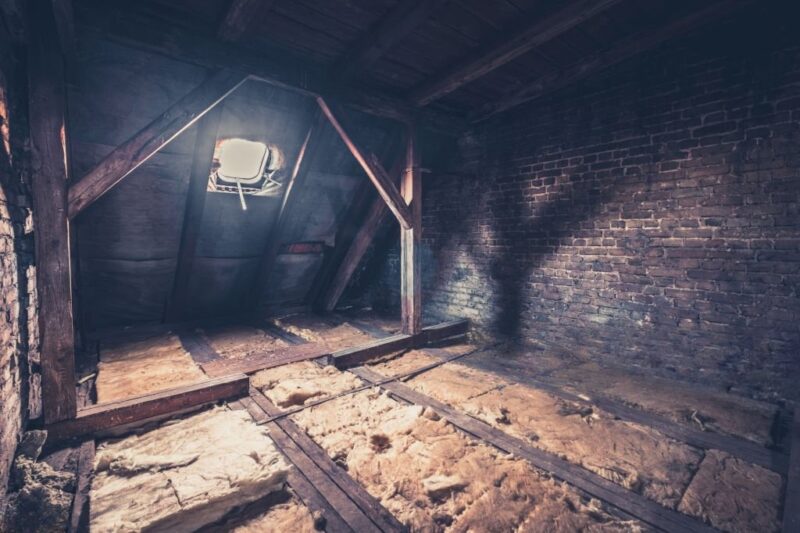
Older insulation does not automatically require replacement, but its condition should be evaluated periodically. Roofing, electrical, plumbing, pest-control, or HVAC work can disturb insulation and leave areas compressed, displaced, or uncovered. Checking these areas can help determine whether the original coverage has been maintained.
7. Visible Damage or Moisture
Wet, stained, deteriorated, or contaminated insulation should be evaluated before additional material is installed. Moisture may indicate a roof leak, plumbing issue, condensation, or another problem that needs to be corrected first. Once the underlying cause is addressed, a professional can determine whether the affected insulation can remain or should be partially or fully replaced.
How to Choose the Right R-Value for an Attic Upgrade
Choosing the right R-value involves more than picking a number from an insulation chart. The best approach considers your climate, existing insulation, attic design, air leakage, ventilation, HVAC setup, and applicable building requirements so the upgrade fits the home as a whole.
Identify Your Climate Zone
Climate plays an important role in determining appropriate insulation levels because homes in different regions face different heating and cooling demands. Florida homeowners should use guidance that applies to their specific climate zone rather than relying on recommendations developed for colder parts of the country.
Determine the Existing Insulation Type
Before planning an upgrade, identify whether the attic currently contains fiberglass batts, blown-in fiberglass, cellulose, spray foam, or another material. Different insulation types provide different R-values per inch, so knowing the material is essential when estimating existing thermal resistance.
Measure Existing Depth and Coverage
Measure insulation depth in several areas of the attic rather than relying on a single spot. Check the center, edges, corners, and areas around framing or penetrations. Uneven coverage may mean some parts of the attic provide less thermal resistance than others even when the average depth appears adequate.
Evaluate Insulation Condition
Existing insulation should be checked for compression, settling, moisture, contamination, displacement, and deterioration. Material that is clean, dry, and in good condition may sometimes remain in place and contribute to the total R-value, while damaged areas may need additional attention.
Consider the Attic Assembly
The way the attic is designed can influence the appropriate insulation strategy. Vented and unvented attics function differently, and the location of the thermal boundary matters. Roof-deck insulation, ceiling-level insulation, attic access points, and other construction details should all be considered before selecting a target R-value.
Check Air Sealing and Ventilation
R-value measures resistance to heat flow, but it does not address uncontrolled air leakage. Gaps around wiring, plumbing, attic hatches, duct chases, and other penetrations may need to be sealed where appropriate. In vented attics, intended ventilation pathways should also remain clear when insulation is added.
Consider HVAC Equipment and Ductwork
Many Florida homes have HVAC equipment or ductwork located in the attic. Their condition and placement can influence overall comfort and cooling performance. Insulation cannot repair duct leaks, airflow problems, or equipment issues, so these systems should be evaluated separately when needed.
Verify Applicable Building Requirements
Insulation requirements can vary depending on the home, project type, construction details, and current local codes. Rather than relying only on a generic national R-value chart, homeowners should verify the requirements that apply to their specific attic upgrade.
Choose Material Based on the Complete Project, Not R-Value Alone
The highest R-value per inch is not automatically the best insulation choice. Material cost, available space, installation method, moisture conditions, air sealing needs, existing insulation, ventilation, and attic configuration all matter. A complete evaluation can help determine both an appropriate R-value and an insulation material that works well with the home.
Why Port Charlotte Homeowners Trust Dale’s AC
Choosing the right attic insulation strategy requires more than looking at an R-value chart. At Dale’s AC, we help Port Charlotte and Southwest Florida homeowners evaluate insulation, HVAC performance, air leakage, and attic conditions together so recommendations are based on the home as a complete system.
Serving Southwest Florida Since 1974
We have been serving homeowners in Southwest Florida since 1974, giving our team decades of experience with the region’s long cooling seasons, hot attic conditions, and home comfort challenges. Our local experience helps us provide practical recommendations that reflect the needs of homes in Port Charlotte and surrounding communities.
Understanding R-Value and Existing Insulation Needs
We can help homeowners understand their existing insulation type, depth, coverage, and condition before deciding whether an upgrade is appropriate. Rather than focusing only on reaching a higher R-value, we look for issues such as settling, compression, bare areas, moisture, and damaged material that may affect attic performance.
HVAC and Building-Envelope Evaluations
Attic insulation and HVAC performance often influence one another, but insulation is not always the only factor behind comfort concerns or long AC runtime. We consider how the attic, ductwork, air conditioning system, and building envelope work together so potential problems can be identified more accurately.
Air Sealing and Home Comfort Solutions
Insulation slows heat transfer, while air sealing helps limit uncontrolled air movement. When attic air leakage is contributing to comfort concerns, addressing those gaps before adding insulation may help create a more complete upgrade. We can help determine which improvements are appropriate for the home.
Clear Recommendations Based on Your Home
Every attic is different, which is why we base recommendations on the existing insulation, attic design, HVAC configuration, ventilation, moisture conditions, and overall project goals. Our focus is on helping homeowners understand their options without assuming that the highest R-value or the most expensive material is automatically the right solution.
Financing Options for Qualifying Projects
For homeowners planning larger comfort or insulation improvements, Dale’s AC offers financing options for qualifying projects. This can provide additional flexibility when completing recommended upgrades while allowing homeowners to choose solutions that fit their home and budget.
FAQs About R-Value and Why It Matters for Attics
Is a Higher R-Value Always Better?
Not necessarily. A higher R-value generally provides greater resistance to heat flow, but the best insulation level depends on the home, climate, attic design, existing insulation, available space, and applicable building requirements. Installation quality, air sealing, ventilation, and moisture conditions also matter.
How Do I Find the R-Value of My Existing Attic Insulation?
Start by identifying the insulation material and measuring its depth in several areas of the attic. Because different materials provide different R-values per inch, depth alone is not enough. A professional evaluation can provide a more accurate estimate when the insulation is uneven, compressed, layered, damaged, or difficult to identify.
Does Insulation Thickness Determine R-Value?
Thickness is an important factor, but it does not determine R-value by itself. The insulation material, density, condition, and installation method also affect thermal resistance. Two materials installed at the same thickness may provide different R-values.
Does Compressed Insulation Lose R-Value?
Compression can reduce the effectiveness of fiberglass insulation because it changes the material from its intended installed thickness. Fiberglass batts should generally be installed without excessive compression so they can provide the thermal resistance they were designed to deliver.
Does Wet Insulation Lose Effectiveness?
Wet insulation can have reduced performance and may also indicate an unresolved roof leak, plumbing issue, or condensation problem. Moisture can affect different insulation materials in different ways, so wet or damaged insulation should be evaluated rather than simply covered with additional material.
Can a Higher Attic R-Value Help My AC?
Improving attic thermal resistance may help reduce the amount of heat entering conditioned living spaces, which can reduce unnecessary cooling demand. However, insulation cannot correct HVAC problems such as refrigerant issues, restricted airflow, duct leakage, improper sizing, or aging equipment.
Will Increasing R-Value Lower My Cooling Bills?
It may help, especially if the attic currently has inadequate or uneven insulation, but lower cooling bills are not guaranteed. Energy use also depends on weather, HVAC efficiency, duct condition, air leakage, thermostat settings, home construction, electricity rates, and household habits.
How Often Should Attic Insulation Be Evaluated?
There is no single inspection schedule that applies to every home. It can be helpful to evaluate attic insulation after roof, electrical, plumbing, pest-control, or HVAC work, as well as when you notice moisture, disturbed insulation, uneven temperatures, or unexplained changes in cooling performance. Older insulation can also be checked periodically to confirm that its depth, coverage, and condition remain adequate.
Raise the R-value, Not the Temperature. Call Dale’s AC!
Understanding R-value can help you make more informed decisions about attic insulation and overall home comfort. The right insulation level can help slow heat transfer, support more consistent indoor temperatures, and reduce unnecessary cooling demand, but R-value should always be considered alongside installation quality, air sealing, ventilation, moisture conditions, ductwork, and HVAC performance. Whether you are evaluating attic insulation in Port Charlotte, AC maintenance in Port Charlotte, AC installation in Port Charlotte, or AC replacement in Port Charlotte, looking at the home as a complete system can lead to better long-term comfort decisions.
At Dale’s AC as a professional HVAC company in Port Charlotte, we provide residential HVAC services in Port Charlotte, air conditioning repair in Port Charlotte, Indoor air quality in Port Charlotte, and Commercial HVAC services in Port Charlotte alongside attic insulation solutions designed around your home or property. We can assess your existing insulation, HVAC system, ductwork, and comfort needs, explain your options clearly, and discuss available financing options for qualifying projects. Don’t let your comfort go through the roof. Call us today at (941) 629-1712 or contact us to schedule an evaluation