

Choosing the right air filter for your HVAC system is one of the simplest ways to support indoor air quality, airflow, and system performance. As air circulates through your home, the filter helps capture dust, pollen, pet dander, lint, and other airborne particles while also protecting important HVAC components from debris buildup.
However, the highest-rated or most expensive filter is not always the best choice. The right option depends on the filter size, MERV rating, material, thickness, household needs, and HVAC compatibility. In this guide, you will learn how air filters work, how to compare common options, and how to choose a filter that balances particle capture with proper airflow.
Why Choosing the Right Air Filter Matters
The right HVAC air filter does more than collect visible dust. It helps protect system components, supports steady airflow, and contributes to cleaner indoor air. Choosing a filter that fits properly and matches your system’s specifications can also help reduce unnecessary strain and maintain more consistent performance.
Protects HVAC Components
Air filters help capture dust, dirt, hair, and other debris before they reach sensitive HVAC components. Without effective filtration, particles may collect on the evaporator coil, blower motor, and other internal parts, where buildup can interfere with heat transfer and airflow. A properly selected and regularly replaced filter helps keep these components cleaner.
Supports Better Indoor Air Quality
A compatible air filter may help reduce airborne particles such as dust, pollen, pet dander, and lint as air circulates through the home. While standard HVAC filters cannot remove every indoor pollutant, they can support a broader indoor air quality strategy that also includes regular cleaning, ventilation, and humidity control.
Helps Maintain Proper Airflow
Your HVAC system needs steady airflow to heat and cool the home effectively. A filter that is dirty, incorrectly sized, or too restrictive may limit air circulation and reduce system performance. Choosing the right level of filtration helps balance particle capture with the airflow your equipment requires.
Reduces Unnecessary HVAC Strain
When airflow is restricted, the HVAC system may run for longer periods to reach the thermostat setting. This can increase the workload on the blower motor and other components, potentially contributing to premature wear. A clean, compatible filter helps the system move air more efficiently.
Supports Energy Efficiency
Restricted airflow can cause longer system runtimes and greater energy consumption. Although replacing the filter alone will not resolve every efficiency issue, maintaining a clean filter may help the HVAC system operate more smoothly and avoid wasting energy due to preventable airflow problems.
May Help Extend Equipment Life
Cleaner internal components and reduced airflow strain can support the long-term performance of an HVAC system. Routine filter inspections and timely replacement may help limit debris buildup and unnecessary wear, especially during periods of heavy heating or cooling use.
How HVAC Air Filters Work
HVAC air filters are designed to clean the air that passes through your heating and cooling system before it is recirculated throughout the home. Understanding where the filter is located, how it functions, and what it can and cannot do makes it easier to choose the right filter and maintain it properly.
Where the Air Filter Is Located
Depending on your HVAC system, the air filter may be located behind a return-air grille, inside the air handler, within the furnace cabinet, or in a dedicated filter compartment. Regardless of its location, the filter is installed where return air enters the system so airborne particles can be captured before the air reaches the HVAC equipment.
How Air Moves Through the Filter
As air is pulled from your home through the return vents, it passes through the air filter before entering the HVAC system. The filter captures airborne particles while allowing cleaned air to continue through the heating or cooling equipment. Once conditioned, the air is distributed back into the home through the supply vents, creating continuous air circulation during normal system operation.
What HVAC Filters Capture
Most residential HVAC filters are designed to capture common airborne particles, including dust, lint, pollen, pet hair, and pet dander. Higher-efficiency filters may also capture smaller particles, depending on their MERV rating and compatibility with the HVAC system. The amount of material a filter captures depends on its design, condition, and how often it is replaced.
What Standard Filters Cannot Remove
While HVAC filters play an important role in improving indoor air quality, they are not designed to solve every air quality concern. Standard filters do not remove excess humidity, carbon monoxide, radon, all household odors, or gaseous pollutants. Addressing these concerns may require additional solutions such as proper ventilation, humidity control, carbon monoxide detectors, or specialized air-cleaning equipment.
Why Proper Installation Matters
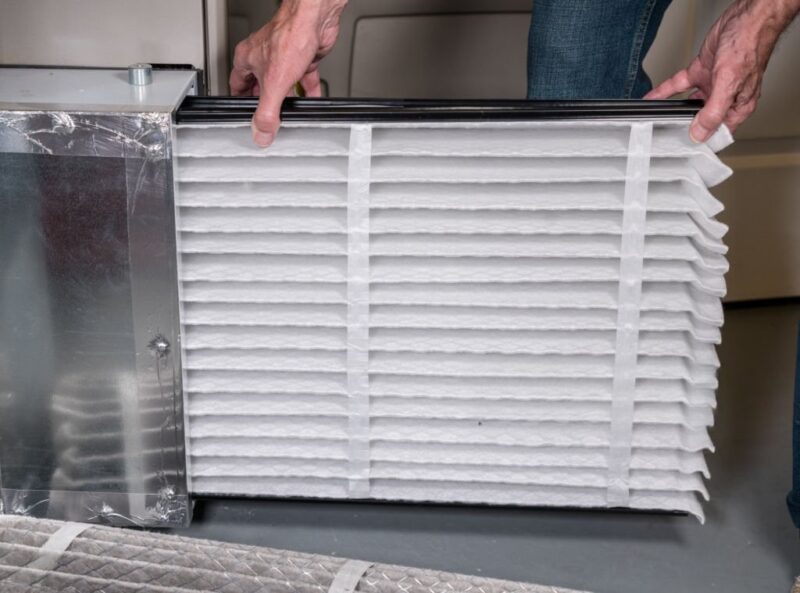
Even a high-quality air filter cannot perform effectively if it is installed incorrectly. The filter should fit securely inside the filter compartment without gaps that allow unfiltered air to bypass the filter media. It should also be installed in the correct direction by following the airflow arrow printed on the frame, which typically points toward the blower or air handler. Proper installation helps maximize filtration while maintaining appropriate airflow through the HVAC system.
Understanding HVAC Air Filter Ratings
Air filter ratings help homeowners compare how effectively different filters capture airborne particles. These ratings can be useful when choosing a replacement filter, but they should always be considered alongside airflow requirements, filter size, and HVAC system compatibility.
What Is a MERV Rating?
MERV stands for Minimum Efficiency Reporting Value. It is an industry-standard rating used to compare how well air filters capture particles of different sizes. In general, a higher MERV rating indicates greater particle-capture efficiency, but the most appropriate rating depends on the design and capacity of the residential HVAC system.
MERV 1 to 4 Filters
MERV 1 to 4 filters are designed primarily to capture larger particles such as lint, fibers, and visible dust. They provide basic protection for HVAC equipment but offer limited filtration for smaller airborne particles. These filters are generally less restrictive, though they may not meet the indoor air quality needs of every household.
MERV 5 to 8 Filters
MERV 5 to 8 filters are commonly used in residential HVAC systems. They may help capture household dust, pollen, lint, and some pet-related particles while maintaining manageable airflow resistance in many systems. Their balance of filtration and airflow makes them a practical option for general household use.
MERV 9 to 12 Filters
MERV 9 to 12 filters provide enhanced filtration and can capture smaller airborne particles than lower-rated filters. They may be helpful in homes where dust, pollen, or pet dander is a concern. However, the denser filter media can create greater airflow resistance, so compatibility with the HVAC system should be confirmed before upgrading.
MERV 13 and Higher Filters
MERV 13 and higher filters are designed to capture finer particles, including some smoke particles and other small airborne contaminants. While these filters may support improved particle control, not every residential HVAC system is designed to handle the added resistance. A professional evaluation can help determine whether the blower, ductwork, and filter cabinet are suitable for a higher-efficiency filter.
Why Higher MERV Is Not Always Better
A higher MERV rating does not automatically mean better overall HVAC performance. If a filter is too restrictive, it may reduce airflow, increase the workload on the blower motor, and make it harder for the system to heat or cool the home effectively. Blower capacity, ductwork limitations, filter thickness, and system design should all be considered when selecting a filter.
MERV, MPR, and FPR Ratings
MERV is an industry-standard rating, while MPR and FPR are rating systems used by specific manufacturers or retailers. MPR, or Microparticle Performance Rating, focuses on a filter’s ability to capture very small particles, while FPR, or Filter Performance Rating, is a retailer-specific comparison scale. Because these systems use different methods, homeowners should review product details carefully rather than assuming the numbers are directly interchangeable.
7 Common Types of HVAC Air Filters
1. Fiberglass Air Filters
Fiberglass filters are among the most affordable options and typically create little airflow resistance. They are designed mainly to capture larger particles such as lint, dust, and debris before they enter the HVAC system. Because they provide limited filtration and often have a shorter service life, they usually need to be replaced more frequently.
2. Pleated Air Filters
Pleated filters have folded filter media that creates more surface area for particle capture. This design allows them to collect more dust, pollen, pet dander, and other airborne particles than many basic fiberglass filters. They are available in a range of MERV ratings, making it easier to choose a level of filtration that matches the HVAC system.
3. Electrostatic Air Filters
Electrostatic filters use electrically charged media to attract and capture airborne particles. They may help collect finer dust and other small particles that pass through lower-efficiency filters. Both disposable and washable versions are available, though performance and maintenance requirements vary by product.
4. Washable Air Filters
Washable filters are designed to be cleaned and reused instead of replaced after each service interval. They require regular washing and must be allowed to dry completely before being returned to the HVAC system. Although they may reduce replacement waste, some washable filters offer lower particle-capture efficiency than quality disposable pleated filters.
5. Activated Carbon Filters
Activated carbon filters contain material that can adsorb certain odors, smoke-related compounds, and gaseous pollutants. They may be useful in homes with cooking odors, pets, or other recurring smells, but their effectiveness depends on the amount and quality of carbon used. These filters should support, not replace, cleaning, ventilation, and removal of the odor source.
6. Media Air Filters
Media filters are thicker, deep-pleated filters that provide greater surface area than standard one-inch filters. Their larger design can support effective particle capture while allowing longer replacement intervals in many homes. However, they require a compatible filter cabinet and should be professionally selected to maintain proper airflow.
7. HEPA Filters
HEPA filters offer high-efficiency particle capture and are designed to remove very small airborne particles under specific testing conditions. Their dense media creates significant airflow resistance, which means most standard residential HVAC systems cannot use a true HEPA filter without modification. Dedicated filtration equipment or a separate whole-home system may be required to use HEPA filtration safely and effectively.
Choosing the Right MERV Rating for Your HVAC System
Selecting the right MERV rating involves more than choosing the filter with the highest number. The goal is to improve particle capture while maintaining the airflow your HVAC system needs to operate effectively. System design, ductwork, blower capacity, and filter thickness should all be considered before making an upgrade.
Check Manufacturer Recommendations
Start by reviewing the HVAC owner’s manual and equipment specifications for guidance on approved filter sizes and MERV ratings. Manufacturers often provide a recommended range based on the system’s airflow requirements. Following these guidelines can help prevent the use of a filter that is too restrictive for the equipment.
Consider Blower Capacity
The blower must be able to move enough air through the filter and throughout the duct system. A higher-MERV filter may create additional pressure resistance, which can affect air movement and overall system performance. If the blower is not designed to handle that resistance, airflow may decline.
Evaluate the Ductwork
Duct design also affects which filter rating is appropriate. Undersized ducts, restricted return-air pathways, and limited return-air capacity can make airflow problems worse when a denser filter is installed. A filter upgrade may not perform as expected if the duct system already struggles to move enough air.
Consider Filter Thickness
Filter thickness can influence both filtration and airflow. One-inch filters are common, but they have less surface area than four-inch media filters and may become loaded more quickly. Thicker filters can provide more surface area and lower pressure resistance at similar efficiency levels, but they require a compatible filter cabinet.
Balance Filtration and Airflow
The best filter should capture the particles that matter most to your household without creating excessive pressure drop. A filter that is too restrictive may reduce system efficiency, weaken airflow, and increase operating strain. Choosing the right balance helps support both indoor air quality and reliable HVAC performance.
Ask an HVAC Professional Before Upgrading
Before moving to a substantially higher MERV rating, consider having an HVAC professional evaluate the system. Static pressure testing, airflow measurements, and filter cabinet inspection can help determine whether the equipment can handle the upgrade. A technician can recommend a compatible filter that supports particle capture without compromising system performance.
Choosing an Air Filter Based on Household Needs
The right HVAC air filter depends not only on the equipment but also on how the home is used. Pets, outdoor dust, smoke, occupancy, and Florida’s climate can all affect how quickly a filter becomes dirty and which filtration level may be appropriate.
Homes With Pets
Pet hair and dander can cause HVAC filters to load more quickly, especially in homes with multiple animals or heavy shedding. A compatible pleated filter may help capture more pet-related particles than a basic fiberglass filter, but it should still allow proper airflow. Pet owners should inspect filters frequently and replace them when visible buildup develops.
Homes With Allergy Concerns
Households concerned about pollen, fine dust, or pet dander may benefit from a higher-efficiency filter that is compatible with the HVAC system. While improved filtration may help reduce certain airborne particles, it cannot prevent or treat allergies, and results can vary depending on the source of the irritation and the condition of the home.
Homes With Young Children or Older Adults
Homes with young children or older adults may place a greater priority on indoor air quality and consistent comfort. A well-fitted filter with an appropriate MERV rating can help reduce common airborne particles, but the choice should still reflect the HVAC system’s airflow requirements. Professional guidance can help balance household sensitivity with equipment compatibility.
Homes With Smoke or Odor Concerns
Fine particle filtration may help capture some airborne smoke particles, while activated carbon can help reduce certain odors and gaseous compounds. However, standard filters cannot remove every pollutant, and thin carbon layers may offer limited odor control. Source removal, ventilation, and proper cleaning remain important.
Homes Near Construction or Busy Roads
Outdoor dust and fine particles can enter homes located near construction areas, unpaved roads, or heavy traffic. These conditions may cause filters to become dirty more quickly and require shorter replacement intervals. Regular inspections can help prevent excessive buildup and restricted airflow.
Vacation Homes
Vacation homes may remain unoccupied for long periods, but the HVAC system may still run to manage temperature and humidity. Scheduled filter inspections are important because a clogged filter can affect airflow even when no one is present. Property owners should check filters before leaving, after returning, and during routine home maintenance visits.
Florida Homes
Florida homes often experience year-round cooling, seasonal pollen, high humidity, and heavy HVAC use. These conditions can cause filters to load faster than they would in milder climates. Monthly inspections, proper humidity control, and timely filter replacement can help support reliable airflow and system performance.
8 Signs You May Be Using the Wrong Air Filter
1. Weak Airflow From the Vents
Reduced airflow from supply vents may occur when the filter is clogged or too restrictive for the system. If airflow drops soon after installing a new filter, the MERV rating, thickness, or fit may not be appropriate for the equipment.
2. Longer Heating or Cooling Cycles
When the HVAC system struggles to move enough air, it may run longer to reach the thermostat setting. Longer cycles can reduce comfort and increase system strain, especially if the filter is heavily loaded or creates excessive resistance.
3. Rising Energy Bills
A noticeable increase in energy use may be connected to restricted airflow and longer system runtime. While many factors can affect utility costs, an incorrect or dirty filter is one of the simpler issues homeowners can check first.
4. Frozen Evaporator Coils
Insufficient airflow across the evaporator coil can contribute to freezing because the coil may become too cold. A clogged or overly restrictive filter is one possible cause, but refrigerant problems, blower issues, dirty coils, and other HVAC faults can also lead to ice formation.
5. Whistling Near the Filter Slot
Whistling sounds around the return grille or filter compartment may indicate that air is being pulled through a gap or a filter with too much resistance. An incorrect size, poor fit, or excessive dirt buildup can all contribute to this noise.
6. Dust Buildup Around Vents
Visible dust around supply vents may suggest that air is bypassing the filter, the filter is installed incorrectly, or the duct system has leaks. It can also result from normal household dust, so the filter fit and condition should be checked before assuming a larger problem.
7. The Filter Bends or Collapses
A filter that bends, bows, or gets pulled into the return opening may be the wrong size, lack proper support, or face excessive pressure. Moisture exposure and severe clogging can also weaken the filter frame and media.
8. Uneven Indoor Temperatures
Rooms that feel warmer or cooler than others may be experiencing reduced or unbalanced airflow. Although the filter may be contributing to the issue, uneven temperatures can also result from duct leaks, blocked vents, insulation problems, or equipment sizing concerns.
How Often Should HVAC Air Filters Be Changed?
HVAC air filter replacement schedules vary based on the filter design, household conditions, and how often the system runs. Rather than relying on a fixed calendar alone, homeowners should inspect filters regularly and replace them when visible buildup begins to restrict airflow.
General Replacement Guidelines
Many residential HVAC filters are replaced every one to three months, but the correct schedule depends on the filter type, thickness, MERV rating, and conditions inside the home. Manufacturer guidance provides a useful starting point, but households with more dust, pets, or frequent HVAC use may need earlier replacement.
Homes With Pets
Pet hair and dander can cause filters to become dirty more quickly, especially in homes with multiple animals or heavy shedding. Pet owners should inspect filters more frequently and replace them whenever buildup becomes noticeable, even if the recommended replacement date has not arrived.
Homes With Allergy Concerns
Homes concerned about pollen, fine dust, and pet dander may benefit from consistent filter inspections and timely replacement. A clean, compatible filter may help reduce certain airborne particles, but it cannot prevent, diagnose, or treat allergies or other health conditions.
Homes With Multiple Occupants
More people usually means more daily activity, open doors, laundry, cooking, and movement throughout the home. These activities can increase dust and airborne debris, causing the HVAC filter to load faster than it would in a less occupied household.
Florida Summer Conditions
Florida’s long cooling season and extended summer HVAC cycles can cause filters to collect particles quickly. Because air conditioning systems may operate almost year-round, homeowners should inspect filters frequently rather than assuming they will last for the maximum interval shown on the packaging.
Vacation and Seasonal Homes
Filters in vacation and seasonal homes still require attention, even when the property is unoccupied. Homeowners should include filter checks in scheduled property maintenance and inspect the filter before leaving, during extended absences when possible, and after returning.
One-Inch vs Thicker Filters
One-inch filters generally have less surface area and may require more frequent replacement than thicker media filters. Four-inch and other deep-pleated filters often hold more debris before becoming restrictive, but replacement timing still depends on manufacturer guidance, system use, and household conditions.
Monthly Filter Inspections
Checking the air filter once a month is one of the most reliable ways to determine when replacement is needed. Visible dust buildup, dark discoloration, pet hair, or debris covering the filter media may indicate that it is time for a new filter. Monthly inspections allow homeowners to create a replacement schedule based on their actual household rather than a general estimate.
9 Common Air Filter Mistakes Homeowners Make
1. Choosing the Highest MERV Rating
A higher MERV rating does not automatically make a filter the best choice for every HVAC system. Filters with denser media may create more resistance, and some systems may not be designed to handle the added pressure drop. The ideal rating should balance particle capture with the airflow requirements of the equipment.
2. Buying the Wrong Filter Size
A filter that is too small can leave gaps that allow unfiltered air to pass around the media, while one that is too large may not fit securely in the cabinet. Homeowners should check the dimensions printed on the existing filter and confirm whether the system uses nominal or actual sizing.
3. Installing the Filter Backward
Most filters include an arrow showing the correct direction of airflow. The arrow should point toward the blower and away from the return-air opening. Installing the filter backward may reduce its effectiveness and can place unnecessary stress on the filter frame.
4. Forgetting to Remove the Packaging
Some replacement filters are wrapped in plastic or protective packaging that must be removed before installation. Leaving the packaging in place can block airflow almost completely and may cause immediate performance problems. Always inspect the filter before placing it in the system.
5. Waiting Until the Filter Is Completely Clogged
A filter does not need to be covered in thick dust before it should be replaced. Waiting until it is fully clogged can restrict airflow, lengthen HVAC cycles, and increase system strain. Monthly inspections make it easier to replace the filter before buildup becomes excessive.
6. Reusing Disposable Filters
Disposable filters are designed for one-time use and should not be washed, vacuumed, or reinstalled. Cleaning can damage the media, weaken the frame, and reduce filtration performance. Only filters specifically labeled as washable or reusable should be cleaned and used again.
7. Stacking Multiple Filters
Using two filters in the same airflow path can create excessive resistance and reduce system performance. Most residential HVAC systems are not designed for multiple filters unless the setup was specifically engineered that way. Homeowners should use only the filter configuration recommended by the manufacturer or an HVAC professional.
8. Ignoring Gaps Around the Filter
Gaps around the filter allow air to bypass the media, carrying dust and debris into the HVAC system. A properly sized filter should fit securely without being forced into place. If gaps remain, the filter cabinet or return grille may need adjustment.
9. Assuming Filters Solve Every Air Quality Problem
HVAC filters are only one part of an indoor air quality strategy. They may help capture certain airborne particles, but they cannot fully address humidity, ventilation, odors, gaseous pollutants, mold growth, or pollutant sources. Effective indoor air quality management may also require source control, cleaning, moisture management, and additional equipment.
Indoor Air Quality Products That May Support Better Filtration
A compatible HVAC filter is an important part of indoor air quality management, but filtration alone may not address every household concern. Depending on the home, additional products may help manage smaller particles, odors, microbial growth on HVAC surfaces, excess moisture, or changing indoor conditions.
Whole-Home Air Purifiers
Whole-home air purifiers are installed within or alongside the HVAC system to treat air as it circulates through the home. Depending on the technology used, they may help capture or reduce smaller airborne particles that pass through standard filters. Proper sizing and professional installation are important to avoid creating excessive airflow resistance.
Electronic Air Cleaners
Electronic air cleaners use electrically charged components to attract and collect airborne particles. They may help reduce fine dust, pollen, and other particles, but their performance depends on the equipment design, installation, and regular maintenance. Collection plates or internal components must be cleaned according to manufacturer instructions.
Activated Carbon Filtration
Activated carbon filtration is designed to adsorb certain odors, smoke-related compounds, and gaseous pollutants. It may complement particle filtration in homes with recurring odor concerns, although effectiveness varies based on the amount and quality of carbon used. Source control and ventilation remain important because carbon filters cannot remove every gas or odor.
UV-C Lights
UV-C lights are commonly installed near evaporator coils or drain pans to help reduce microbial growth on illuminated HVAC surfaces. They may support coil cleanliness when correctly positioned and maintained, but they do not function as particle filters or odor eliminators. UV-C equipment should not be viewed as a replacement for filtration, cleaning, moisture control, or professional remediation when contamination is present.
Whole-Home Dehumidifiers
Whole-home dehumidifiers help remove excess moisture from indoor air and may be especially useful in Florida’s humid climate. Maintaining appropriate humidity can support comfort and help reduce conditions that contribute to musty environments. However, a dehumidifier does not capture airborne particles and should not replace proper HVAC filtration.
Smart Indoor Air Quality Monitors
Smart indoor air quality monitors can track factors such as particle levels, humidity, and temperature in real time. These readings may help homeowners recognize patterns, identify changing conditions, and decide when filters or other systems need attention. Monitors provide information, but they do not remove pollutants or correct indoor air quality problems on their own.
Why Florida Homeowners Trust Dale’s AC
Choosing the right air filter and indoor air quality products requires more than comparing labels at the store. Florida homeowners trust Dale’s AC for local experience, professional system evaluations, and recommendations that account for both household needs and HVAC performance.
Local HVAC Experts Since 1974
Dale’s AC has served Southwest Florida homeowners since 1974. Our long-standing local experience helps us understand how year-round cooling, high humidity, seasonal pollen, and heavy HVAC use can affect filtration, comfort, and indoor air quality.
Professional Air Filter Recommendations
We help homeowners select filters based on the correct size, suitable MERV rating, equipment specifications, and household conditions. By considering HVAC compatibility along with concerns such as pets, dust, or frequent system use, we can recommend filtration that supports particle capture without placing unnecessary strain on the system.
Indoor Air Quality Solutions for Florida Homes
Dale’s AC offers indoor air quality solutions designed for Florida homes, including improved filtration, whole-home air purification, humidity control, and smart monitoring. These options can work together to address different indoor conditions while supporting reliable HVAC airflow and performance.
Professional HVAC Maintenance
Routine HVAC maintenance helps keep filters, blowers, coils, drain systems, and other components working as intended. During a maintenance visit, our technicians can check airflow, inspect filter condition, identify developing issues, and help reduce the risk of preventable performance problems.
Personalized HVAC Recommendations
Every home has different equipment, occupancy patterns, comfort preferences, and indoor air quality priorities. We provide personalized recommendations based on the condition of the system and the homeowner’s goals rather than relying on a one-size-fits-all solution.
FAQs About Choosing the Right Air Filter
Is MERV 13 too restrictive for residential HVAC systems?
A MERV 13 filter may be appropriate for some residential HVAC systems, but it can be too restrictive for others. Compatibility depends on the blower capacity, ductwork, filter thickness, return-air design, and manufacturer specifications. Before upgrading, homeowners should confirm the approved MERV range or ask an HVAC professional to evaluate airflow and static pressure.
Can I use a HEPA filter in my HVAC system?
Most standard residential HVAC systems are not designed to accommodate true HEPA filters because the dense media can create significant airflow resistance. Whole-home HEPA filtration usually requires dedicated equipment, a compatible bypass system, or other system modifications. A professional evaluation can help determine whether HEPA filtration is practical for the home.
How do I know which air filter size to buy?
Check the dimensions printed on the existing filter, review the HVAC owner’s manual, or measure the filter slot carefully. Keep in mind that the nominal size shown on the label may differ slightly from the filter’s actual dimensions. The replacement should fit securely without being forced into place or leaving gaps around the edges.
How often should I replace a one-inch air filter?
Many one-inch filters need replacement every one to three months, but the correct schedule depends on the filter type, household conditions, and system use. Homes with pets, multiple occupants, heavy dust, or year-round cooling may need more frequent changes. Monthly inspections can help homeowners determine a more accurate replacement schedule.
Are expensive HVAC filters always better?
A more expensive filter is not automatically the best option for every home or HVAC system. Higher-priced filters may offer improved materials, greater surface area, or higher particle-capture efficiency, but they may also create more airflow resistance. The best filter is one that meets household needs while remaining compatible with the equipment.
Can a dirty air filter damage an HVAC system?
A severely clogged filter can restrict airflow and contribute to longer cycles, blower strain, frozen evaporator coils, and reduced system performance. Over time, these conditions may increase wear on HVAC components. Replacing filters before they become heavily loaded can help reduce unnecessary strain.
Can the wrong air filter increase energy bills?
An overly restrictive, clogged, or incorrectly installed filter can reduce airflow and cause the HVAC system to run longer to reach the thermostat setting. Longer operating cycles may contribute to higher energy use. However, rising utility bills can have several causes, so the entire system may need to be inspected if the increase continues.
Do HVAC filters remove odors?
Standard HVAC filters are mainly designed to capture airborne particles and generally provide limited odor control. Filters containing activated carbon may help reduce certain odors and gaseous compounds, but performance varies by product. Cleaning, ventilation, moisture control, and removing the odor source remain important.
Don’t Let Your Comfort Get Filtered Out!
Choosing the right HVAC air filter requires balancing particle capture, airflow, filter size, MERV rating, and equipment compatibility. The correct filter can support system performance, energy efficiency, and better indoor air quality in Port Charlotte, while the wrong filter may restrict airflow and increase strain. Regular inspections and professional guidance can also help homeowners protect their systems and recognize when they may need AC maintenance in Port Charlotte, air conditioning repair in Port Charlotte, or other residential HVAC services in Port Charlotte.
At Dale’s AC, we can evaluate your current system, check airflow and filter compatibility, and recommend filtration options based on your household needs. We also provide AC installation in Port Charlotte and AC replacement in Port Charlotte when existing equipment can no longer support reliable comfort and performance. Call us at (941) 629-1712 or contact us to schedule an HVAC and indoor air quality assessment for your home.