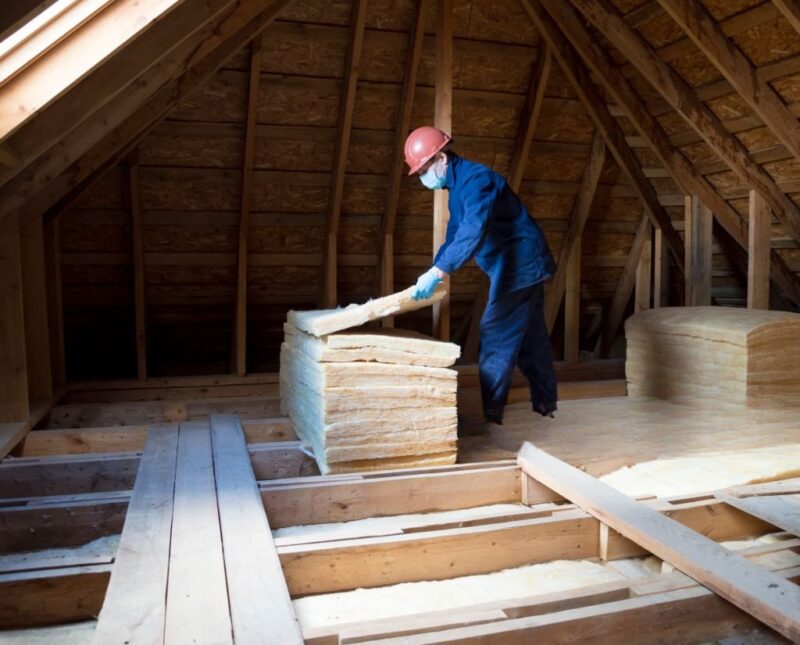


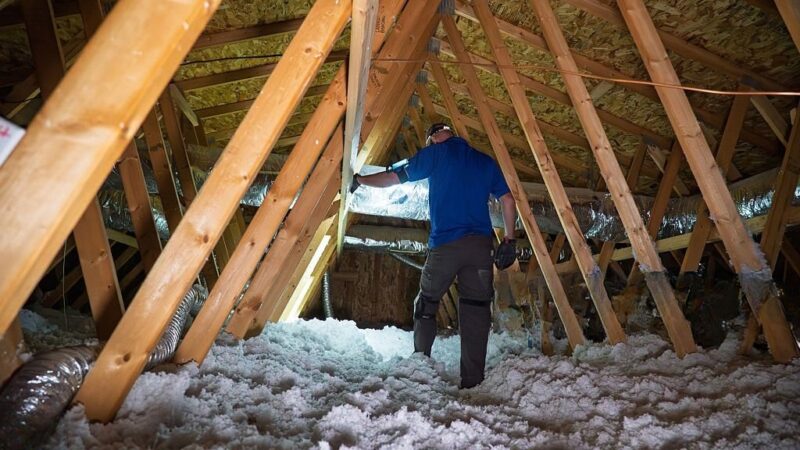
Attic insulation can remain effective for many years, but there is no single expiration date that applies to every home or insulation material. Fiberglass, cellulose, blown-in insulation, and spray foam can have different service lives, and their long-term performance depends heavily on installation quality and attic conditions. Moisture exposure, pest activity, compression, settlement, contamination, and disturbance during home repairs can all affect insulation well before the material reaches its potential lifespan.
For homeowners in Florida, heat, humidity, heavy rain, roof leaks, and attic HVAC or ductwork conditions can also influence how insulation performs over time. That is why age alone does not necessarily tell you whether your attic insulation needs to be replaced. In this guide, we’ll explain how long different types of attic insulation may last, what can shorten their useful service life, signs that your insulation may need attention, and how to determine whether existing material can remain, be supplemented, or should be replaced.
What Determines How Long Attic Insulation Lasts?
The useful life of attic insulation depends on more than the year it was installed. Material type, installation quality, moisture, pests, physical disturbance, and changes to the home can all influence how well insulation performs over time. This is why an older insulation system may still be serviceable, while newer insulation that has been damaged or improperly installed may need attention much sooner.
Type of Insulation Material
Different insulation materials have different physical properties and may respond differently to moisture, compression, settlement, and disturbance. Fiberglass batts, blown-in fiberglass, cellulose, and spray foam can all remain useful for extended periods when properly installed and maintained, but their condition should be evaluated rather than relying on age alone.
Quality of the Original Installation
Even durable insulation may not perform as intended if it was installed incorrectly. Gaps, uneven coverage, compressed batts, insufficient depth, and poorly fitted insulation around attic components can create thermal weak points from the beginning. Proper installation helps the material maintain more consistent thermal resistance throughout the insulated area.
Moisture and Water Exposure
Roof leaks, plumbing leaks, condensation, and other moisture sources can shorten the useful life of attic insulation. Depending on the material and severity of exposure, insulation may become wet, compressed, matted, contaminated, or otherwise damaged. The moisture source should be identified and corrected before damaged insulation is covered or replaced.
Pest Activity and Contamination
Rodents, insects, and other pests can disturb insulation, create pathways through loose-fill materials, damage surrounding components, and leave behind waste or nesting material. Significant contamination may affect whether insulation can appropriately remain in place. Pest activity and entry points should be addressed before affected areas are repaired or reinsulated.
Compression, Settlement, and Physical Damage
Insulation relies partly on maintaining its intended thickness, density, and coverage. Compression can reduce the thermal resistance of some insulation materials, while loose-fill products may settle over time and leave areas with less material than intended. Foot traffic, storage, and other physical disturbances can also create gaps or uneven coverage.
Attic Maintenance and Disturbance
HVAC technicians, electricians, plumbers, roofers, and other professionals may need to enter an attic for repairs or upgrades. During this work, insulation can be moved, compressed, or displaced to access equipment and building components. Checking the insulation after attic work can help identify areas that need to be restored to their intended coverage.
Changes to the Home Over Time
A home’s attic may change considerably after its original insulation is installed. HVAC replacements, new ductwork, electrical upgrades, plumbing repairs, roof work, exhaust modifications, and renovations can alter attic conditions or disturb existing insulation. Periodic evaluation can help determine whether these changes have created gaps, damaged insulation, or introduced conditions that should be addressed.
Does Attic Insulation Lose Effectiveness Over Time?
Attic insulation can become less effective over time, but age itself is not always the reason. Changes in thickness, coverage, moisture exposure, compression, settlement, and physical disturbance can affect how well insulation resists heat flow. Instead of assuming older insulation automatically needs replacement, homeowners should consider its current condition and how consistently it covers the intended area.
Insulation Does Not Necessarily Fail Because It Is Old
Insulation does not automatically stop working after a specific number of years. Properly installed material that remains dry, undamaged, and relatively undisturbed may continue providing useful thermal resistance for decades. Replacement decisions should generally consider condition, coverage, contamination, and performance rather than age alone.
How Compression Can Affect Thermal Resistance
Many insulation materials are designed to provide a certain thermal resistance at a specified thickness and density. Compressing materials such as fiberglass can reduce their effective R-value compared with insulation installed at its intended thickness. Storage, foot traffic, or improper installation can contribute to compression in accessible attic areas.
How Settlement Can Create Thin Areas
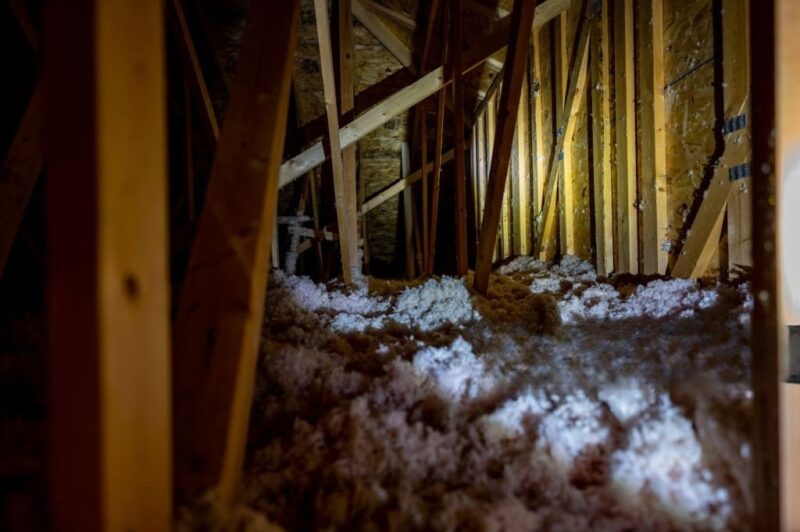
Loose-fill insulation, including some fiberglass and cellulose installations, can settle after installation. As the material settles, its depth may decrease and coverage can become less consistent, particularly if it is also disturbed. Areas with insufficient depth may provide less thermal resistance than areas where the intended insulation level has been maintained.
How Gaps and Displacement Affect Coverage
Insulation that has been moved during HVAC, electrical, plumbing, roofing, or other attic work can leave gaps and exposed areas. Even when most of the insulation remains in good condition, inconsistent coverage can create thermal weak points. Restoring displaced insulation may be appropriate when the existing material is otherwise suitable to remain.
How Moisture Can Affect Insulation Condition
Roof leaks, plumbing problems, condensation, and other sources of moisture can change the physical condition of certain insulation materials. Significant exposure may cause insulation to mat, compress, clump, or become contaminated. Wet insulation should be evaluated along with the moisture source before deciding whether it can remain, needs additional material, or requires removal.
Why Installed Condition Matters for R-Value
R-value describes a material’s resistance to heat flow under specified conditions, but the labeled R-value does not guarantee that every part of an attic provides the same level of thermal resistance. Actual performance can be affected by thickness, density, compression, gaps, installation quality, and material condition. Evaluating how the insulation is installed can therefore be just as important as identifying its age or original R-value.
8 Factors That Can Shorten the Life of Attic Insulation
1. Roof and Plumbing Leaks
Roof damage, failed flashing, plumbing leaks, and other sources of water intrusion can saturate or repeatedly expose attic insulation to moisture. Depending on the insulation material and severity of exposure, it may become matted, compressed, displaced, or contaminated. The leak should be repaired before affected insulation is replaced or additional material is installed.
2. Persistent Moisture and Condensation
Insulation can also be exposed to moisture without an obvious leak. Condensation may develop when humid air encounters sufficiently cool surfaces, including certain ductwork or building components. Recurring moisture should be investigated because simply allowing insulation to dry does not correct the condition causing the condensation.
3. Pest Infestations
Rodents and other pests can tunnel through, move, compress, or contaminate attic insulation while creating nesting areas. Pest activity may also leave gaps and uneven coverage behind. The infestation and entry points should be appropriately addressed before contaminated or displaced insulation is removed, restored, or replaced.
4. Mold or Other Contamination
Mold-like growth or other significant contamination can affect whether existing insulation is appropriate to leave in place. Mold may grow on dust, debris, or nearby susceptible building materials when sufficient moisture is present, so visible growth should also prompt investigation of the moisture source. Extensive suspected contamination may require evaluation by a qualified mold or remediation professional.
5. Foot Traffic and Storage
Attic insulation is not designed to serve as a walking or storage surface. Stepping on insulation or placing belongings directly over it can compress or displace the material, potentially reducing its effective thermal resistance. When attic access is necessary, designated structural walking or storage surfaces should be used where available rather than relying on the insulation or ceiling surface for support.
6. HVAC, Electrical, or Plumbing Work
Technicians and contractors may need to move insulation to reach ductwork, wiring, plumbing, HVAC equipment, or other attic components. If the material is not properly restored afterward, gaps and thin areas can remain. Inspecting accessible insulation after attic work can help identify areas where coverage has been disturbed.
7. Improper Installation
Poor installation can limit insulation performance from the beginning. Compressed fiberglass batts, insufficient loose-fill depth, gaps around framing, uneven distribution, or inappropriate installation around attic components can create weak points. Installation should also account for applicable clearances, access requirements, ventilation pathways, and the specific insulation material being used.
8. Blocked or Inappropriate Attic Ventilation
In a conventional vented attic, insulation should not block soffit vents or other intended airflow pathways. However, adding more ventilation is not automatically better, especially in Florida’s humid climate, where outdoor air can carry substantial moisture. Vented and unvented attics require different strategies, so ventilation should be evaluated as part of the overall attic design rather than changed in isolation.
How Florida Heat and Humidity Can Affect Attic Insulation
Florida’s combination of heat, humidity, heavy rainfall, and long cooling seasons creates demanding conditions for attics. Insulation helps slow heat transfer between the attic and conditioned living space, but its performance also depends on moisture conditions, coverage, air leakage, ventilation strategy, and nearby HVAC components. Understanding how these factors interact is important when evaluating whether existing insulation is still suitable or needs attention.
High Attic Temperatures
Attics can become extremely hot when the roof is exposed to strong sunlight, increasing the temperature difference between the attic and conditioned rooms below. Properly installed insulation helps resist heat transfer through the ceiling assembly. However, gaps, compression, insufficient depth, or disturbed insulation can create areas where thermal resistance is lower than intended.
Humid Outdoor Conditions
Florida’s outdoor air can contain substantial moisture, which makes attic moisture management more complicated than simply increasing airflow. In a conventional vented attic, outdoor air intentionally enters through intake vents, while uncontrolled air leakage can introduce additional moisture under certain conditions. The attic’s ventilation, air sealing, insulation, and HVAC configuration should therefore be considered together.
Condensation and Moisture Exposure
Condensation can develop when warm, humid air contacts a surface cold enough for moisture to form. In an attic, this may occur around ductwork, HVAC components, pipes, or other surfaces under the right conditions. Repeated moisture exposure can affect some insulation materials and surrounding building components, so the source of condensation should be identified rather than simply adding more insulation.
Roof Leaks During Heavy Rain
Florida’s heavy rain and storms can expose weaknesses in roofing, flashing, seals, and roof penetrations. Water entering the attic can wet insulation as well as roof sheathing, framing, and ceiling materials. Roof leaks should be appropriately repaired, and affected insulation should be evaluated before it is covered, supplemented, or replaced.
HVAC and Ductwork Located in the Attic
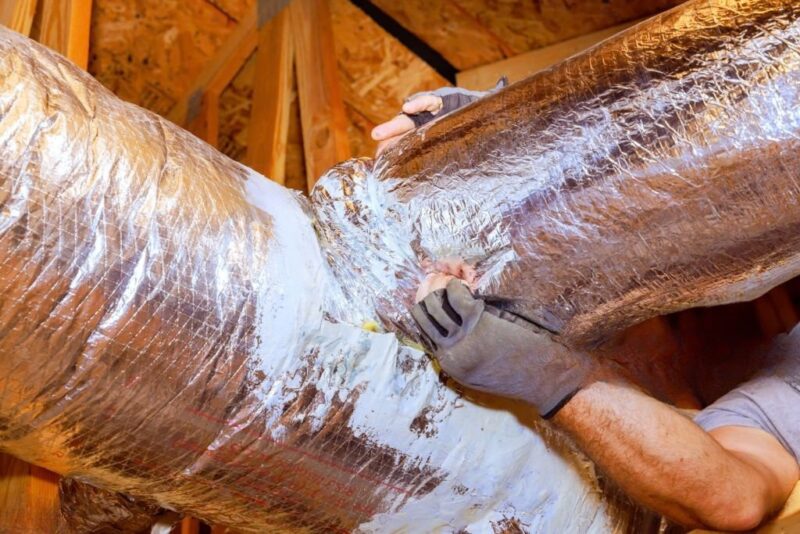
Many Florida homes have HVAC equipment or ductwork running through attic spaces. Damaged duct insulation, air leakage, condensation, or condensate drainage problems can contribute to moisture concerns and affect nearby insulation. Building insulation cannot repair these mechanical issues, so HVAC and ductwork problems should be evaluated and corrected separately when present.
Why Florida Attics Should Be Evaluated as Complete Systems
Insulation is only one part of an attic’s overall performance. Air leakage, ventilation, roof condition, moisture, ductwork, HVAC equipment, exhaust ducts, and insulation can all interact. Evaluating these components together can help identify why insulation has deteriorated or become disturbed and whether it should remain, be supplemented, or be replaced rather than assuming age alone determines its useful life.
8 Signs Your Attic Insulation May Need Attention
1. Thin or Uneven Insulation
Insulation should provide reasonably consistent coverage across the areas it is intended to protect. Sections that appear noticeably thinner than surrounding areas may have settled, shifted, or been disturbed. Uneven coverage can create thermal weak points and may indicate that the insulation needs to be redistributed, supplemented, or otherwise evaluated.
2. Compressed or Matted Fiberglass
Fiberglass insulation is designed to provide thermal resistance at a particular thickness and density. When batts or loose fiberglass become compressed or matted, they may provide less thermal resistance than intended. Compression can result from storage, foot traffic, improper installation, moisture exposure, or work performed in the attic.
3. Settled Loose-Fill Insulation
Loose-fill fiberglass and cellulose can settle after installation, reducing their depth over time. Settlement does not automatically mean all of the insulation needs replacement, but areas that no longer provide the intended depth may warrant additional material or other corrective work after existing conditions are evaluated.
4. Wet or Damp Insulation
Wet or persistently damp insulation is a sign that a moisture source should be investigated. Roof leaks, plumbing problems, condensation, or HVAC-related moisture may be responsible. Depending on the insulation material, severity of exposure, contamination, and physical condition, affected insulation may need drying, evaluation, or removal rather than simply being covered with new material.
5. Water Stains or Discoloration
Water stains or unusual discoloration on insulation, roof sheathing, framing, or nearby ceiling materials may indicate current or previous moisture exposure. Discoloration alone does not confirm mold or an active leak. The source and current moisture conditions should be evaluated before deciding whether insulation needs replacement.
6. Pest Droppings or Nesting Materials
Droppings, nesting material, tunnels, or other signs of pest activity can indicate that insulation has been disturbed or contaminated. Pest entry points and active infestations should be appropriately addressed before insulation is restored or replaced. Significantly contaminated material may require removal depending on the extent and condition.
7. Visible Gaps and Bare Areas
Bare sections of the attic floor or gaps around framing and other areas can reduce the consistency of the insulation layer. These gaps may result from poor installation, shifting material, previous repairs, or attic access. An evaluation can determine whether existing insulation can be repositioned or whether additional material is appropriate.
8. Insulation Disturbed by Previous Work
HVAC replacements, duct repairs, electrical upgrades, plumbing work, roofing projects, and other home improvements can require contractors to move attic insulation. If it is not restored afterward, thin spots, gaps, or compressed areas may remain. Checking insulation after attic work can help ensure appropriate coverage is restored while maintaining necessary access and clearances.
How to Help Attic Insulation Last Longer
Attic insulation can provide useful thermal resistance for many years when it remains dry, properly installed, and relatively undisturbed. Protecting it involves more than watching its age. Addressing leaks, pests, physical damage, ventilation concerns, and HVAC issues can help preserve the insulation’s condition and reduce the likelihood of premature removal or replacement.
Address Roof and Plumbing Leaks Promptly
Roof and plumbing leaks can expose insulation to repeated or significant amounts of water. Even a small leak can affect insulation and surrounding materials if it continues over time. Repair the source promptly and evaluate affected insulation before allowing it to remain or installing additional material.
Keep Insulation Dry
Insulation generally performs best when it stays dry and maintains its intended thickness and coverage. In addition to direct leaks, condensation and other moisture sources can affect attic conditions. Damp or wet insulation should be evaluated to determine where the moisture originated and whether the affected material can appropriately remain.
Address Pest Problems and Entry Points
Rodents and other pests can tunnel through, displace, compress, or contaminate attic insulation. Addressing the infestation without correcting entry points may allow the problem to return. Pest concerns should be appropriately resolved before contaminated insulation is removed or replacement material is installed.
Avoid Compressing Insulation With Storage
Boxes, containers, and other belongings placed directly on insulation can compress the material and reduce its effective thermal resistance. If an attic is designed to accommodate storage, belongings should remain on appropriate structural storage surfaces rather than directly on insulation. Storage should also avoid blocking ventilation pathways or required access to attic components.
Minimize Unnecessary Foot Traffic
Walking through an attic can compress or displace insulation, particularly around frequently accessed HVAC equipment and other service areas. Avoid stepping directly on insulation or unsupported ceiling surfaces. Where attic access is necessary, use designated structural walking surfaces when available and take care not to disturb surrounding insulation.
Maintain Appropriate Attic Ventilation
In a conventional vented attic, soffit vents, baffles, and exhaust openings should remain unobstructed so the ventilation system can function as intended. However, more ventilation is not automatically better, especially in Florida’s humid climate. Any changes should account for whether the attic is designed as a vented or unvented assembly and how ventilation interacts with air sealing and moisture conditions.
Inspect Attic Ductwork and HVAC Equipment
HVAC equipment and ducts located in the attic can influence nearby conditions. Damaged duct insulation, air leakage, condensation, or condensate drainage problems may expose surrounding materials to moisture or require technicians to disturb insulation during repairs. Periodic HVAC maintenance and evaluation of accessible attic ductwork can help identify these concerns before they affect a larger area.
Restore Insulation Disturbed During Home Repairs
Roofing, electrical, plumbing, HVAC, and other home projects may require insulation to be temporarily moved. Once the work is complete, suitable existing insulation should be restored to appropriate coverage where possible while maintaining required clearances and access. Checking the affected area afterward can help prevent gaps, compressed sections, or bare spots from becoming permanent weak points in the insulation layer.
Why Professional Attic Evaluation Matters
Deciding whether attic insulation needs replacement should involve more than estimating how old it is. A professional evaluation can examine the insulation’s material, depth, coverage, physical condition, and surrounding attic environment to identify problems that may be affecting its performance. This can help homeowners distinguish between insulation that needs replacement and material that may only require localized corrections or additional coverage.
Determine Whether Insulation Actually Needs Replacement
Older insulation does not automatically need to be removed. If it remains dry, reasonably intact, uncontaminated, and appropriately installed, some or all of it may still be suitable to remain. An evaluation can help determine whether replacement, supplementation, redistribution, or another approach is appropriate based on current conditions.
Identify Problems That May Have Shortened Its Service Life
Roof leaks, plumbing problems, condensation, pests, foot traffic, storage, and previous attic work can affect insulation before it reaches its potential service life. Identifying these contributing factors is important because installing new insulation without correcting the underlying problem may expose the replacement material to the same conditions.
Evaluate Insulation Depth, Coverage, and Condition
An attic evaluation can identify thin areas, gaps, compressed batts, settled loose-fill material, and insulation that has been displaced. The material’s condition and installed depth can then be considered alongside the appropriate insulation requirements for the home. R-value depends partly on material, thickness, density, and installed condition, so visual age alone provides an incomplete picture.
Identify Moisture, Pest, or Ductwork Concerns
Wet insulation, pest contamination, damaged duct insulation, condensation, and other visible concerns may indicate problems beyond the insulation itself. Depending on what is found, additional evaluation or repairs by a roofer, plumber, pest professional, HVAC technician, mold professional, or another qualified specialist may be appropriate before insulation work proceeds.
Determine Whether Existing Insulation Can Remain
Complete removal is not always necessary when only part of an attic has been affected. Suitable existing insulation may be able to remain while damaged or contaminated areas receive appropriate attention. The decision depends on factors such as insulation type, moisture exposure, contamination, physical condition, coverage, and the work planned for the attic.
Avoid Unnecessary Removal and Replacement
Removing serviceable insulation can add unnecessary work and expense when the material is still appropriate to keep. A professional evaluation helps focus recommendations on the actual condition of the attic rather than applying a fixed replacement schedule. The goal should be to correct identified problems and determine the appropriate insulation strategy for the home, whether that involves keeping, supplementing, repairing, or replacing existing material.
Why Port Charlotte Homeowners Choose Dale’s AC
Knowing whether attic insulation needs replacement takes more than checking how many years it has been installed. At Dale’s Air Conditioning & Heating, we consider insulation condition alongside HVAC equipment, ductwork, visible moisture concerns, and other attic conditions within our expertise. This helps us provide practical recommendations based on what we find in your home rather than relying on a one-size-fits-all replacement schedule.
Serving Southwest Florida Since 1974
Dale’s AC has served Port Charlotte and surrounding Southwest Florida communities since 1974. Our decades of local experience have given us firsthand familiarity with the cooling, ductwork, attic insulation, and indoor comfort considerations homeowners commonly encounter in Florida homes.
Experience With Florida Attics
Florida attics can experience substantial heat and humid conditions throughout much of the year. We understand that attic insulation should be evaluated based on its depth, coverage, physical condition, and surrounding environment rather than age alone. We can identify insulation that appears thin, uneven, compressed, disturbed, or otherwise in need of attention.
Understanding Florida Heat and Humidity
Southwest Florida’s climate makes heat and moisture important considerations when evaluating attic insulation. Humid outdoor air, condensation, roof leaks, air leakage, and HVAC-related conditions can all influence the attic environment. We consider these factors before recommending that existing insulation be supplemented or replaced.
HVAC, Ductwork, and Attic Insulation Experience
Because we work with HVAC systems, ductwork, and attic insulation, we can evaluate how these components may interact within the attic. Damaged duct insulation, visible condensation, HVAC condensate issues, or inconsistent building-insulation coverage may warrant attention. When roofing, plumbing, pest, mold, or other concerns fall outside our scope, an appropriately qualified specialist may also need to be involved.
Recommendations Based on Your Home
Every attic is different, so we base our recommendations on the conditions we find rather than assuming insulation needs replacement after a specific number of years. Depending on its condition, existing insulation may be suitable to remain, need additional coverage, require localized attention, or warrant replacement. Our goal is to help you understand your options and choose an appropriate approach for your home.
FAQs About How Long does Attic Insulation Last
How Often Should Attic Insulation Be Replaced?
Attic insulation does not need to be replaced on a universal schedule. Its useful life depends on the material, installation quality, moisture exposure, pest activity, contamination, compression, and disturbance. Instead of replacing insulation simply because it reaches a certain age, evaluate its current depth, coverage, and physical condition.
Can Attic Insulation Last 50 Years?
Some insulation materials can potentially remain useful for 50 years or longer when properly installed and kept dry, intact, and relatively undisturbed. However, a long potential lifespan does not guarantee that insulation will perform appropriately for that entire period. Actual attic conditions should be considered when deciding whether older insulation can remain.
How Do I Know If My Attic Insulation Is Still Good?
Look for reasonably consistent coverage and insulation that remains dry and free from significant contamination or physical damage. Thin areas, compression, matting, moisture, pest activity, or large gaps may indicate that attention is needed. A professional attic evaluation can provide a more complete assessment when the condition is uncertain.
How Long Does Spray Foam Insulation Last?
Properly installed spray foam can remain in place for decades, but there is no single service-life figure that applies to every installation. Open-cell and closed-cell foam have different properties, and performance can be influenced by installation quality, water intrusion, physical damage, building modifications, and changes to the surrounding roof or attic assembly.
Does Attic Insulation Lose R-Value With Age?
Age alone does not necessarily cause insulation to suddenly lose its R-value. Effective thermal resistance can be affected when insulation settles, compresses, becomes wet, develops gaps, or is physically disturbed. This is why the installed condition of older insulation is often more useful to evaluate than its age by itself.
Should I Remove Old Insulation Before Adding New Insulation?
Not always. Existing insulation that is dry, reasonably intact, uncontaminated, and otherwise suitable may be able to remain beneath additional compatible insulation. Wet, significantly contaminated, pest-damaged, or severely deteriorated material may require removal. Existing conditions should be evaluated before adding another layer.
Can Pest Damage Shorten the Life of Attic Insulation?
Yes. Rodents and other pests can tunnel through, compress, move, or contaminate attic insulation, potentially leaving gaps and uneven coverage. Pest problems and entry points should be appropriately addressed before affected insulation is restored or replaced.
Is Old Insulation Causing My AC to Run Longer?
Possibly, but long AC runtime does not automatically mean old insulation is responsible. Thin, damaged, or poorly installed insulation can contribute to greater cooling demand, but dirty filters, airflow restrictions, duct leakage, equipment problems, HVAC sizing, outdoor temperatures, thermostat settings, and other factors can also affect runtime. Evaluating both the attic and HVAC system can help identify the contributing conditions.
Before You Call Your Insulation Ancient, Call Dale’s AC!
Attic insulation does not come with one universal expiration date. Its useful life depends on the material, installation quality, moisture exposure, pest activity, compression, contamination, and how well it has been maintained over the years. Before replacing attic insulation in Port Charlotte based on age alone, evaluating its current depth, coverage, and condition can help determine whether it can remain, needs additional material, or should be replaced. Addressing roof leaks, moisture, pests, ductwork problems, and other contributing conditions first can also help protect new or existing insulation.
At Dale’s AC as a professional HVAC company in Port Charlotte, we can evaluate your attic insulation, ductwork, and HVAC system and help you determine an appropriate next step for your home. Along with attic insulation in Port Charlotte, we provide AC maintenance in Port Charlotte, AC installation in Port Charlotte, AC replacement in Port Charlotte, air conditioning repair in Port Charlotte, Indoor air quality in Port Charlotte, residential HVAC services in Port Charlotte, and Commercial HVAC services in Port Charlotte, with financing options available for qualifying projects. Call us at (941) 629-1712 or contact us, and we’ll help you understand what your attic and HVAC system may need without assuming older insulation automatically needs to go.