

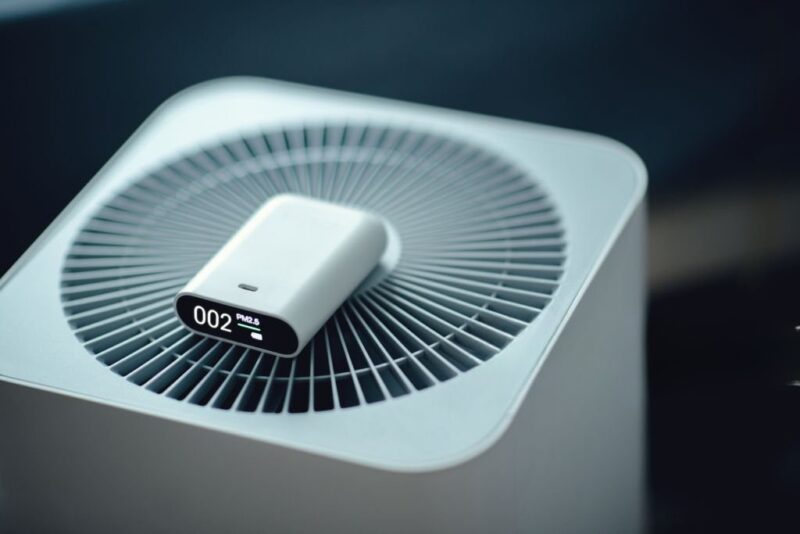
Indoor air quality isn’t always something you can see, smell, or feel. While obvious issues like dust or odors may signal a problem, many airborne particles and pollutants are invisible to the naked eye. That’s where indoor air quality (IAQ) monitoring devices can help. These devices measure environmental conditions and, depending on the model, may track airborne particles, humidity, temperature, volatile organic compounds (VOCs), carbon dioxide (CO₂), and other indoor air quality indicators. However, no single monitor measures every possible contaminant or diagnoses every indoor air quality concern.
An air quality monitor is best viewed as one tool within a broader indoor air quality strategy. It can help homeowners identify changing conditions, monitor long-term trends, and determine when ventilation, filtration, humidity control, or HVAC maintenance may need attention. In this buyer’s guide, we’ll explain the different types of indoor air quality monitors, the features to look for, how to interpret common readings, and how to choose the right device for your home’s needs.
Why Indoor Air Quality Monitoring Matters
Indoor air quality can shift from hour to hour based on household activity, outdoor conditions, and HVAC operation. Monitoring helps homeowners see those changes more clearly, identify recurring patterns, and make better-informed decisions about filtration, ventilation, humidity control, and system maintenance.
Indoor Air Can Change Throughout the Day
Cooking can increase fine particles and moisture, while cleaning products may raise VOC readings. Occupancy, pets, open doors, and outdoor air entering the home can also affect temperature, humidity, carbon dioxide, dust, and pollen levels. An IAQ monitor helps show when these changes occur and whether they return to normal afterward.
Humidity Affects Comfort and Air Quality
Relative humidity influences how comfortable a home feels and how moisture behaves indoors. When humidity stays too high, condensation may form on windows, vents, or other cool surfaces, creating conditions that can support mold growth. Monitoring humidity helps homeowners spot trends and determine whether ventilation, air conditioning, or dehumidification may need attention.
Air Quality Problems Are Not Always Visible
Fine particles, VOCs, and elevated carbon dioxide levels may be present even when the air looks clean. Odors can sometimes signal a source, but a pleasant-smelling room is not always an indication of good air quality, and an unpleasant smell does not reveal the exact pollutant involved. Monitoring provides additional information that sight and smell alone cannot offer.
Monitoring Supports Better HVAC Operation
Air quality data can help homeowners decide when to inspect or replace filters, adjust ventilation, improve humidity control, or schedule an airflow evaluation. Repeated particle spikes, persistent high humidity, or rising carbon dioxide levels may point to conditions that deserve further investigation. A monitor does not diagnose HVAC problems, but it can help identify patterns worth discussing with a professional.
7 Common Indoor Air Quality Measurements
1. Particulate Matter (PM2.5 and PM10)
Particulate matter refers to tiny airborne particles measured by size. PM2.5 includes very fine particles that are 2.5 microns or smaller, while PM10 includes somewhat larger particles up to 10 microns. These readings may reflect dust, smoke, pollen, construction debris, and other fine airborne particles. A monitor can show when particle levels rise, but it may not identify the exact source.
2. Temperature
Temperature readings help homeowners track comfort and see how indoor conditions change throughout the day or across seasons. Unusual temperature patterns may also reveal rooms that heat or cool differently from the rest of the home. While temperature alone does not measure air quality, it can provide useful context when reviewing HVAC performance and humidity trends.
3. Relative Humidity
Relative humidity measures how much moisture is present in the air compared with the maximum amount the air could hold at that temperature. Indoor humidity should generally remain between 30% and 50% for comfort and moisture control. Persistent readings above this range may contribute to condensation, musty conditions, and other moisture-related concerns.
4. Carbon Dioxide (CO₂)
Carbon dioxide readings can provide a general indication of occupancy and ventilation effectiveness. CO₂ levels often rise when several people are in a closed room for an extended period, especially when outdoor-air exchange is limited. Higher readings may suggest that ventilation should be evaluated, although a consumer monitor cannot diagnose every ventilation problem.
5. Volatile Organic Compounds (VOCs)
VOCs are gases released by certain household products and materials, including paint, furniture, adhesives, cleaning supplies, fragrances, and personal care products. Many consumer monitors report total VOCs rather than identifying individual compounds. A rising reading can show that indoor conditions have changed, but it does not always reveal which product or material is responsible.
6. Carbon Monoxide (CO)
Carbon monoxide is a colorless, odorless gas produced by combustion appliances, generators, vehicles, and other fuel-burning sources. Homeowners should not rely on a general IAQ monitor for carbon monoxide protection unless the device is specifically certified for that purpose. Dedicated carbon monoxide alarms are essential life-safety devices and should be installed and maintained according to local requirements and manufacturer instructions.
7. Air Quality Index (AQI)
Some monitors combine several sensor readings into a single air quality index or overall score. This can make the data easier to understand at a glance, but each manufacturer may calculate the score differently. Homeowners should review which measurements are included and avoid assuming that one overall number represents every indoor pollutant or safety concern.
6 Types of Indoor Air Quality Monitors
1. Basic Temperature and Humidity Monitors
Basic monitors track indoor temperature and relative humidity. They are useful for identifying comfort issues, spotting high-moisture conditions, and monitoring seasonal changes. These devices are usually affordable and easy to use, but they do not measure airborne particles, VOCs, carbon dioxide, or other pollutants.
2. Particle Monitors
Particle monitors measure airborne particulate matter, commonly including PM2.5 and PM10. Many use laser particle sensors to estimate the concentration of fine particles such as dust, smoke, pollen, and construction debris. These monitors can help reveal short-term spikes and long-term trends, but they usually cannot identify the exact source or chemical composition of the particles.
3. VOC Monitors
VOC monitors track changes in volatile organic compounds released by products and materials such as paint, furniture, adhesives, cleaning supplies, fragrances, and personal care products. Most consumer models measure total VOCs rather than individual compounds. They can help homeowners recognize patterns, although readings may be influenced by humidity, temperature, and nearby household activities.
4. Carbon Dioxide Monitors
Carbon dioxide monitors are commonly used to evaluate occupancy-related buildup and ventilation effectiveness. CO₂ levels often rise in closed rooms where several people spend extended periods. A dedicated CO₂ monitor can help identify spaces that may benefit from improved outdoor-air exchange, but it does not measure carbon monoxide or replace a life-safety alarm.
5. Multi-Sensor IAQ Monitors
Multi-sensor monitors combine several measurements in one device, such as particulate matter, VOCs, carbon dioxide, humidity, and temperature. They provide a broader overview of changing indoor conditions and often include smart features such as mobile apps, alerts, historical charts, and remote access. These devices are convenient for general home monitoring, but their individual sensors may not match the precision of specialized instruments.
6. Professional Air Quality Instruments
Professional instruments are designed for higher accuracy, specialized testing, and more detailed analysis. They may measure specific gases, particle sizes, airflow, ventilation, or other environmental conditions. These tools are typically more expensive and require training, calibration, and careful interpretation, making them better suited to HVAC technicians, environmental professionals, and targeted investigations than routine homeowner use.
Features to Consider Before Buying
Indoor air quality monitors vary widely in accuracy, features, connectivity, and price. Before choosing a device, homeowners should consider which pollutants they want to track, how they plan to use the data, and whether the monitor will be easy to maintain over time. A more advanced device is not always the best option if its features are difficult to understand or rarely used.
Sensor Accuracy
Accuracy is one of the most important factors to review when comparing monitors. Consumer devices provide useful estimates and trend data, but their readings may not match professional instruments. Look for clear manufacturer specifications, independent testing where available, and information about sensor tolerances. Consistent readings over time are often more useful than expecting laboratory-level precision from a household monitor.
Number of Measurements
Some devices measure only temperature and humidity, while others track particulate matter, VOCs, carbon dioxide, and additional indicators. More sensors can provide a broader view of indoor conditions, but they may also increase cost and complexity. Choose measurements based on the concerns most relevant to your home rather than paying for features you do not need.
Display Quality
A clear, readable display makes it easier to check conditions at a glance. Consider screen size, brightness, color coding, and whether the device shows individual readings or only a simplified score. Homeowners who prefer quick visual feedback may benefit from a monitor with an easy-to-read on-device display rather than relying entirely on a mobile app.
Mobile App Integration
Many smart monitors connect to a mobile app that provides remote access, graphs, alerts, and more detailed explanations. App integration can be helpful for tracking several rooms or checking conditions while away from home. Before buying, review app ratings, privacy settings, subscription requirements, and whether the manufacturer continues to support software updates.
Historical Data and Trends
Historical data allows homeowners to see how air quality changes over hours, days, or seasons. Trend graphs can reveal recurring humidity problems, cooking-related particle spikes, or rising carbon dioxide levels during periods of high occupancy. Devices that store long-term data may provide more useful insight than monitors that show only current readings.
Alerts and Notifications
Custom alerts can notify homeowners when humidity, particulate matter, VOCs, or carbon dioxide exceed selected levels. These notifications can help prompt actions such as turning on ventilation, checking filters, or investigating a recurring source. The best devices allow alert thresholds to be adjusted so homeowners are not overwhelmed by unnecessary warnings.
Calibration Requirements
Some sensors require periodic calibration to maintain useful readings, especially carbon dioxide and professional-grade instruments. Check whether calibration occurs automatically, must be performed manually, or requires returning the device to the manufacturer. A monitor with demanding calibration needs may not be practical for homeowners who prefer simple, low-maintenance equipment.
Battery vs Plug-In Power
Battery-powered monitors offer portability and can be moved between rooms, but batteries require charging or replacement. Plug-in devices provide continuous monitoring without interruption but need access to an outlet and may be less flexible to relocate. Consider whether you want permanent monitoring in one location or temporary comparisons across several rooms.
Wi-Fi and Smart Home Compatibility
Wi-Fi connectivity can support remote monitoring, cloud storage, and smart home automation. Some devices can work with thermostats, air purifiers, ventilation systems, or voice assistants. Compatibility can be useful, but homeowners should confirm that the monitor works with their existing smart home platform and does not require ongoing subscription fees for basic features.
Ease of Use
A monitor should be simple enough to set up, understand, and maintain consistently. Clear instructions, intuitive controls, easy-to-read data, accessible filters or sensors, and reliable app performance all contribute to usability. The best device is one that homeowners will continue checking and using rather than abandoning because the information is confusing or difficult to access.
Choosing the Right Air Quality Monitor for Your Home
The best indoor air quality monitor depends on the age of the home, household activities, local climate, and the specific conditions you want to track. A device with more sensors is not automatically better. Homeowners should focus on the measurements that are most relevant to their environment and choose a monitor that is easy to understand and use consistently.
Homes With Pets
Homes with pets may benefit from a monitor that tracks particulate matter and humidity. Pet dander, dust, and other fine particles can increase with shedding, grooming, and daily activity, while water bowls, wet fur, and Florida humidity may influence indoor moisture. A monitor can help identify patterns, but it cannot distinguish pet dander from every other particle or replace routine cleaning, grooming, and filtration.
Homes With Allergy Concerns
Households concerned about pollen, fine dust, or other airborne particles may prefer a monitor that measures PM2.5 and PM10. These readings can show when particle levels rise after opening windows, cleaning, or during high-pollen periods. However, a consumer monitor cannot diagnose allergies or determine which specific allergen is present, so readings should be used as general guidance rather than medical evidence.
New Homes
New homes may benefit from VOC, humidity, and particle monitoring. Paints, cabinets, flooring, adhesives, furniture, and construction materials may release temporary emissions, while leftover construction dust can affect particle levels. Monitoring can help homeowners see how conditions change as materials off-gas and the HVAC system begins regular operation.
Older Homes
Older homes may benefit from tracking dust, humidity, and carbon dioxide, especially if ventilation, moisture, or air leakage is a concern. Repeated high humidity may point to moisture-control issues, while elevated carbon dioxide can suggest limited outdoor-air exchange in occupied rooms. A monitor cannot inspect hidden building conditions, so persistent readings may still require a professional evaluation.
Florida Homes
Florida homeowners should prioritize relative humidity, temperature, particulate matter, and possibly carbon dioxide. High outdoor moisture, seasonal pollen, frequent HVAC operation, and long cooling seasons can all affect indoor conditions. A monitor can help show whether humidity stays elevated, filters load quickly, or particle levels rise when outdoor air enters the home.
Understanding Air Quality Readings
Indoor air quality readings are most useful when viewed as patterns rather than isolated numbers. A single spike may reflect a normal household activity, while repeated or persistent readings can point to conditions that deserve closer attention. Understanding context helps homeowners avoid overreacting to short-term changes while still recognizing when ventilation, filtration, humidity control, or professional evaluation may be needed.
Looking for Long-Term Trends
Long-term trends provide more meaningful information than one-time readings. Reviewing data over several days or weeks can help reveal recurring humidity problems, particle increases during certain activities, or carbon dioxide buildup when rooms are occupied. These patterns make it easier to compare indoor conditions before and after filter changes, ventilation adjustments, or HVAC maintenance.
Short-Term Spikes Are Normal
Cooking, vacuuming, cleaning, and opening doors can temporarily increase particle or VOC readings. Frying food may raise PM2.5, while cleaning products can increase VOC levels. Vacuuming may disturb settled dust, and open doors can allow pollen, humidity, or outdoor particles to enter. These short-term spikes are not always a sign of a serious problem, especially when readings return to normal soon afterward.
When Humidity Is Too High
Indoor relative humidity should generally remain between 30% and 50%. Readings that stay above this range may contribute to sticky indoor air, condensation, musty odors, and moisture-related concerns. Persistent high humidity may indicate inadequate dehumidification, poor ventilation, HVAC performance issues, or outdoor air entering the home.
When CO₂ Levels Rise
Carbon dioxide often increases when several people occupy a closed room with limited outdoor-air exchange. A rising reading may suggest that ventilation is not keeping pace with occupancy. Opening a door, using mechanical ventilation, or improving fresh-air exchange may help, but persistently high levels should prompt a ventilation evaluation rather than being treated as a complete diagnosis on their own.
Understanding VOC Changes
VOC readings may rise after painting, installing furniture, using cleaning products, applying fragrances, or bringing new materials into the home. Many consumer monitors report total VOCs rather than identifying individual compounds, so the reading should be interpreted as a sign that indoor conditions have changed. Ventilation, source removal, and lower-emission products may help reduce recurring spikes.
When Readings Suggest Further Investigation
Repeated or persistently high readings deserve more attention than brief changes tied to obvious household activity. If humidity, particle, CO₂, or VOC levels remain elevated, homeowners may need an HVAC inspection, ventilation evaluation, filter review, or moisture assessment. Professional testing may also be appropriate when a specific pollutant is suspected or when consumer monitor readings cannot explain ongoing indoor air quality concerns.
7 Common Mistakes When Using Air Quality Monitors
1. Assuming One Reading Tells the Whole Story
A single reading represents conditions at one moment and in one location. Cooking, cleaning, occupancy, outdoor air, or even moving the device can temporarily change the results. Long-term trends are usually more useful than one isolated number, especially when trying to understand recurring humidity, particle, VOC, or carbon dioxide patterns.
2. Placing the Monitor in the Wrong Location
A monitor placed beside a supply vent, open window, kitchen stove, humidifier, or direct sunlight may produce readings that do not represent the rest of the room. Follow the manufacturer’s placement guidance and position the device in a commonly occupied area with unobstructed airflow. Avoid corners, enclosed shelves, and locations exposed to direct heat or moisture.
3. Ignoring Sensor Maintenance
Dust, age, and environmental conditions can affect sensor performance over time. Some devices require cleaning, recalibration, firmware updates, or sensor replacement. Following the manufacturer’s maintenance instructions helps preserve useful readings and reduces the chance of making decisions based on a poorly maintained sensor.
4. Expecting Perfect Accuracy
Consumer air quality monitors are generally designed to show estimates and trends rather than laboratory-grade results. Different models may display slightly different readings even when placed in the same room. Homeowners should focus on consistent patterns and significant changes instead of expecting exact agreement between devices.
5. Assuming Every VOC Spike Is Dangerous
VOC readings may rise temporarily after using cleaning products, fragrances, paint, adhesives, or new furnishings. Most consumer monitors report total VOCs and cannot identify the individual compound or its concentration. A brief spike is not automatically evidence of a dangerous condition, but recurring or persistent elevations may justify source reduction, additional ventilation, or professional testing.
6. Ignoring Humidity Trends
Particle and VOC readings often receive more attention, but humidity can have a major effect on comfort and indoor conditions. Persistent high humidity may contribute to condensation, musty odors, and moisture-related concerns. Reviewing humidity trends alongside temperature and HVAC runtime can help reveal problems that a single air quality score may overlook.
7. Using the Monitor Instead of Maintaining the HVAC System
A monitor can show that indoor conditions are changing, but it cannot replace filter changes, ventilation checks, coil cleaning, drain maintenance, duct inspections, or professional HVAC service. The device should help guide maintenance decisions, not serve as a substitute for them. Consistently poor readings are a reason to investigate the system and pollutant sources rather than simply continuing to watch the numbers.
Why Florida Homeowners Trust Dale’s AC
Indoor air quality monitoring can reveal useful trends, but the readings only become valuable when homeowners know what they mean and how to respond. Dale’s AC helps Florida homeowners connect monitor data with the condition of their HVAC system, ventilation, humidity, filtration, and airflow so recommendations are based on the home as a whole rather than a single sensor reading.
Serving Southwest Florida Since 1974
Dale’s AC has served Southwest Florida homeowners since 1974. Our decades of local experience give us a practical understanding of how high humidity, seasonal pollen, long cooling seasons, and heavy HVAC use can affect indoor air quality throughout the year.
Comprehensive Indoor Air Quality Evaluations
We evaluate the factors that may influence indoor air conditions, including relative humidity, ventilation, filtration, airflow, ductwork, HVAC performance, and household activities. This whole-home approach helps identify whether recurring readings are connected to moisture, particles, limited fresh-air exchange, equipment concerns, or another source.
Air Quality Monitoring Recommendations
Not every household needs the same type of monitor. We can help homeowners consider which measurements are most relevant, such as humidity, temperature, particulate matter, VOCs, or carbon dioxide. Our team can also offer general guidance on sensor interpretation and monitor placement so readings better reflect normal living conditions rather than a vent, window, kitchen appliance, or other localized source.
Whole-Home Indoor Air Quality Solutions
Dale’s AC offers whole-home solutions that can work alongside air quality monitoring. Depending on the home’s needs, recommendations may include upgraded air filtration, whole-home air purification, dehumidifiers, energy recovery ventilators, or smart IAQ monitoring. Each option addresses a different concern, so multiple solutions may be combined when appropriate.
Personalized Recommendations Based on Your Home
We do not rely on one-size-fits-all recommendations or a single air quality score. Our team considers the home’s size, layout, equipment, occupancy, pets, humidity, ventilation, and primary concerns before recommending products or services. We also explain the benefits, limitations, maintenance needs, and compatibility of each option.
FAQs About Air Quality Monitoring Devices
Are Indoor Air Quality Monitors Accurate?
Consumer indoor air quality monitors can provide useful estimates and help identify trends, but they are not usually as precise as professional instruments. Accuracy varies by sensor type, device quality, placement, calibration, and environmental conditions. Homeowners should focus on recurring patterns and significant changes rather than treating every reading as an exact measurement.
Can an IAQ Monitor Detect Mold?
Most consumer IAQ monitors cannot directly detect mold or confirm that mold is present. They may track conditions associated with mold concerns, such as high humidity, particulate matter, or VOC changes, but those readings do not prove mold growth. Visible growth, musty odors, or persistent moisture should be evaluated separately by a qualified professional.
Do Air Quality Monitors Detect Carbon Monoxide?
Some devices include carbon monoxide sensors, but homeowners should not rely on a general IAQ monitor unless it is specifically designed and certified for carbon monoxide detection. Dedicated carbon monoxide alarms remain essential life-safety devices and should be installed and maintained according to manufacturer instructions and local requirements.
Where Is the Best Place to Put an Air Quality Monitor?
Place the monitor in a commonly occupied area at breathing height, away from direct sunlight, open windows, supply vents, humidifiers, kitchens, and other localized sources. Avoid enclosed shelves and corners where airflow is limited. Follow the manufacturer’s placement guidance for the most representative readings.
Should I Buy a Monitor With VOC Sensors?
A VOC sensor may be useful in homes with new furniture, fresh paint, cleaning products, fragrances, or other materials that release airborne compounds. However, most consumer devices report total VOCs rather than identifying individual chemicals. The readings are most helpful for tracking changes and trends rather than determining the exact source or severity of exposure.
Do I Need More Than One Air Quality Monitor?
One monitor may be enough for a small home or for tracking conditions in a primary living area. Larger, multi-story homes or households with specific concerns in bedrooms, home offices, or basements may benefit from multiple devices. Moving one monitor between rooms can also help compare conditions before purchasing additional units.
Can an Air Quality Monitor Tell Me When to Replace My HVAC Filter?
A monitor may show rising particle levels that suggest filtration deserves attention, but it cannot directly measure how dirty the HVAC filter is. Homeowners should still inspect filters regularly and replace them based on visible buildup, manufacturer guidance, household conditions, and system use.
Are Smart Air Quality Monitors Worth It?
Smart monitors can be worthwhile for homeowners who want mobile alerts, historical data, trend graphs, remote access, and smart home integration. Their value depends on whether the information is easy to understand and leads to useful actions. A simpler monitor may be a better choice for someone who only wants basic humidity or particle readings.
Can an IAQ Monitor Improve Indoor Air Quality?
An IAQ monitor does not clean or condition the air by itself. It can help homeowners identify patterns and decide when to adjust ventilation, replace filters, reduce pollutant sources, manage humidity, or schedule HVAC service. The monitor is most effective when used alongside filtration, source control, ventilation, moisture management, and routine HVAC maintenance.
See What Your Air has Been Trying to Tell You!
Air quality monitoring devices can help homeowners understand how humidity, particles, VOCs, carbon dioxide, and other indoor conditions change over time. However, better indoor air quality in Port Charlotte depends on what happens after those patterns are identified. Regular AC maintenance in Port Charlotte, proper filtration, ventilation, humidity control, and attic insulation in Port Charlotte can all support a more comfortable indoor environment while helping the HVAC system operate as intended.
At Dale’s AC as a reliable HVAC company in Port Charlotte, we provide residential HVAC services in Port Charlotte and commercial HVAC services in Port Charlotte, including AC installation in Port Charlotte, air conditioning repair in Port Charlotte, and AC replacement in Port Charlotte. We can review your monitor readings, evaluate your HVAC system, and recommend practical solutions based on your property’s needs. Call us today at (941) 629-1712 or contact us to schedule an indoor air quality assessment and ask about available financing options for qualifying services.